
Choosing an educational donation programme requires more than good intentions alone. To ensure that the impact of educational giving meets expectations, prospective donors should review a few basic details before contributing.
Five simple questions can help you evaluate a programme—ranging from its overall purpose, fund allocation, and intended beneficiaries to payment security and progress reporting methods. Taking these steps allows you to make well-informed decisions while identifying a trusted educational charity aligned with your goals.
For us, asking questions before donating is not about doubting an organisation. Rather, it is a vital step in understanding how a programme is designed and executed, ensuring your contribution directly reflects your values.
Why Should Prospective Donors Ask Questions?
Every educational donation programme features distinct goals, target audiences, and operational methods. Some focus on expanding access to education, whereas others emphasize providing learning facilities, running literacy campaigns, or offering direct academic mentoring for children.
Because of these differences, initial checks are essential to determine whether an initiative matches your giving objectives. The information gathered also clarifies how the programme operates, who benefits, and how the organisation maintains accountability.
When evaluating an initiative, prioritize official organizational sources, such as programme web pages, progress reports, or donor support centres. Comparing information across multiple charities also provides a more objective perspective before making your choice.
Questions Help Align Programmes with Personal Values
Everyone has unique motivations when donating to charitable causes. You may wish to enhance learning quality, support literacy campaigns, provide school supplies, rebuild educational infrastructure, or fund long-term child mentoring programmes.
By asking direct questions about a programme's core focus, you can verify whether an organisation's mission aligns with your personal priorities. This step helps prevent misunderstandings regarding programme scope, ensuring your support addresses the specific issues you care about most.
Keep in mind that no single operational focus is inherently superior to another; each serves a distinct role based on specific local needs.
Clear Information Reduces Uncertainty Before Donating
Taking time to review programme details before completing a payment enables you to donate with confidence.
Verify whether the organisation provides clear explanations of its goals, fund usage, activity reports, and accessible contact points if you need further information. Organisations that share operational details transparently make it much easier for prospective donors to understand how their support is utilized.
If certain details remain missing or unclear, do not hesitate to reach out to the programme team. Asking questions is completely standard and helps you gain a comprehensive understanding before contributing.
5 Questions to Ask Before Choosing an Educational Donation Programme
After recognising the importance of seeking clear information, use the following five questions as a practical guide when comparing educational donation programmes:
1. What Are the Primary Objectives of the Education Programme?
First, identify the specific educational challenge the programme aims to solve. Reputable organisations clearly outline their targets, operational regions, implementation timeframes, and intended outcomes.
For instance, a programme might focus on expanding school access, constructing educational facilities, improving reading proficiency, or mentoring children through their studies. Detailed descriptions help you assess whether the project matches the cause you want to support.
2. How Are Funds Allocated and Reported?
Next, examine how contributions are managed and how execution details are reported to the public.
Look for activity reports, progress reviews, or general financial breakdowns. It is important to understand that a portion of contributions covers operational expenses required for project execution, monitoring, and evaluation. Therefore, you should not assume that 100% of funds go directly as cash transfers to beneficiaries.
What matters most is that the organisation discloses its financial management openly, allowing donors to see how their gifts power the programme's goals.
3. Who Are the Programme Beneficiaries?
In addition to goals and funding, clarify who benefits from the initiative.
Check whether the organisation specifies target demographic groups, age ranges, operational locations, and selection criteria. This information provides a clearer view of the programme's target audience while managing expectations regarding its scope.
Because needs vary by region, organisations set specific criteria to identify beneficiaries. Understanding this selection process helps you determine whether support reaches the communities you intend to help.
4. How Secure Are Payment Methods and Donor Data?
Before donating, always ensure you are using the organisation’s official channels. This simple check reduces the risk of transaction errors or data misuse.
Key security indicators include official website domains, secure payment gateways, privacy policies, accessible contact information, and automated donation receipts. These details confirm that the organisation maintains reliable donor care mechanisms.
Using official channels also makes it easy to seek assistance regarding donation receipts or specific project queries.
5. How Is Programme Progress and Impact Communicated?
Finally, evaluate how the organisation updates donors and the public on its ongoing work.
Look for progress reports, activity summaries, or regular updates outlining project milestones. Beyond event photos, check whether the organisation tracks established impact metrics so you can assess overall progress over time.
Where available, review reporting intervals and data sources. Consistent communication demonstrates how educational impact is monitored over the long term, going far beyond basic event photo documentation.
Comparing Responses Across Programmes
Once you gather information from several organisations, note down their answers to streamline your review. This structured approach allows you to compare similar initiatives objectively based on available data rather than first impressions alone.
Use the following framework as a simple guide:
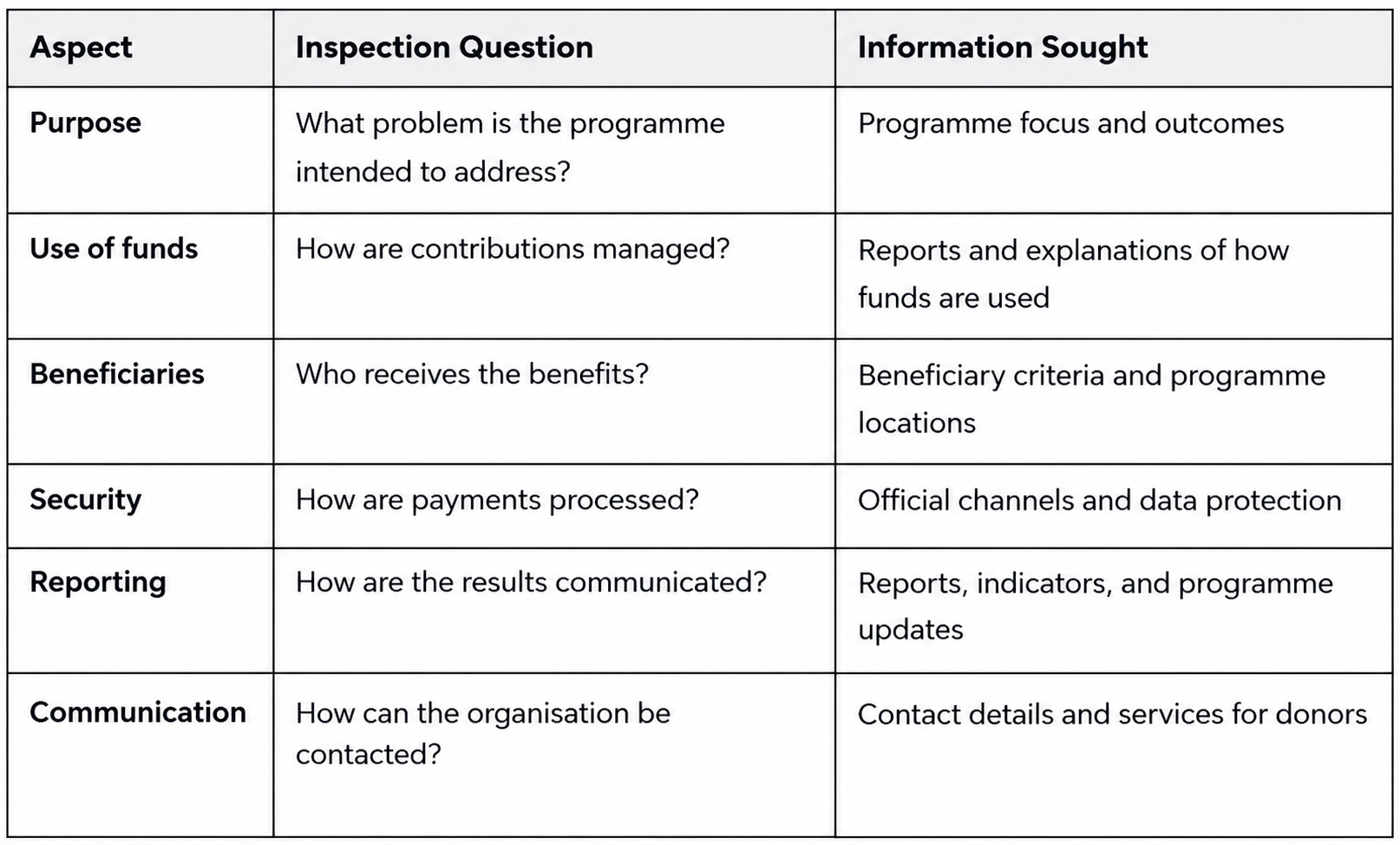
Through this comparison, you can easily identify which programme provides the clearest information and best aligns with your goals.
Signs That Programme Information Is Easily Verifiable
A transparent, accessible programme presents information specifically, consistently, and prominently across its official channels.
Key indicators that an initiative's information is simple to verify include:
Clear Programme Objectives: The purpose and goals are explicitly defined.
Transparent Organisational Identity: Full credentials and organizational background are readily available.
Accessible Progress Reports: Activity updates, impact reviews, and project reports are public.
Visible Contact Details: Support channels and contact information are easy to locate.
Regular Updates: Operational developments are communicated consistently.
Data-Backed Claims: Statements regarding project outcomes are supported by clear indicators, data, or logical context.
Reviewing these points enables prospective donors to evaluate options objectively before making a decision.
Signs Information Requires Further Clarification
Conversely, certain indicators suggest you should gather additional details before donating.
Caution is recommended if programme descriptions remain overly vague, financial allocation details are missing, organizational contact channels are unavailable, or outcome claims lack supporting evidence.
These conditions do not automatically signal a problem with the initiative. However, contacting the project managers directly for clarification ensures your giving decision remains well-informed.
Pre-Donation Checklist
Before committing to an educational donation programme, use this final checklist to guide your evaluation:
Are the programme's goals and target outcomes clearly explained?
Is financial management and fund allocation disclosed openly?
Are target beneficiaries and operational locations clearly defined?
Are transactions processed securely through official channels?
Are regular progress and activity reports made accessible?
Is the organisation's contact information readily available?
If you can answer "yes" to most of these criteria based on official sources, you have a solid foundation for supporting the initiative.
Discover the Right Educational Giving Option for Your Goals
Equipped with these five key evaluation questions, you can now assess educational donation programmes—from their core objectives to their reporting methods—with confidence. The next step is exploring the various giving models available to determine which approach best suits your personal goals, budget, and desired impact.
Now that you know the essential questions to ask before selecting an education project, discover our different child donation options to find the best fit for your goals and readiness.