Dira had just turned 12 years old. She lives in a village in Sintang Regency, West Kalimantan. As a girl, there was one word that felt like a big and frightening secret to her: menstruation. Whenever her friends whispered, “having the period,” Dira would lower her head. She felt uneasy and confused. For her, menstruation was “dirty blood.” She did not yet understand why it happens or how to deal with it.
Accurate information about menstruation had not been well circulated among Dira and other girls in her village. This natural physiological process that every women experience had instead become a topic to be avoided, wrapped in a sense of shame. Menstruation felt even more daunting when access to clean water was not available at school. That was why, discussions about hygiene during menstruation were very rare.
Dira and the other girls at her school have the right to access proper sanitation facilities and to have correct knowledge about menstruation. This is essential for their health and protection. Therefore, as a partner in the village where Dira lives, Wahana Visi Indonesia (WVI) sought to bring about change.
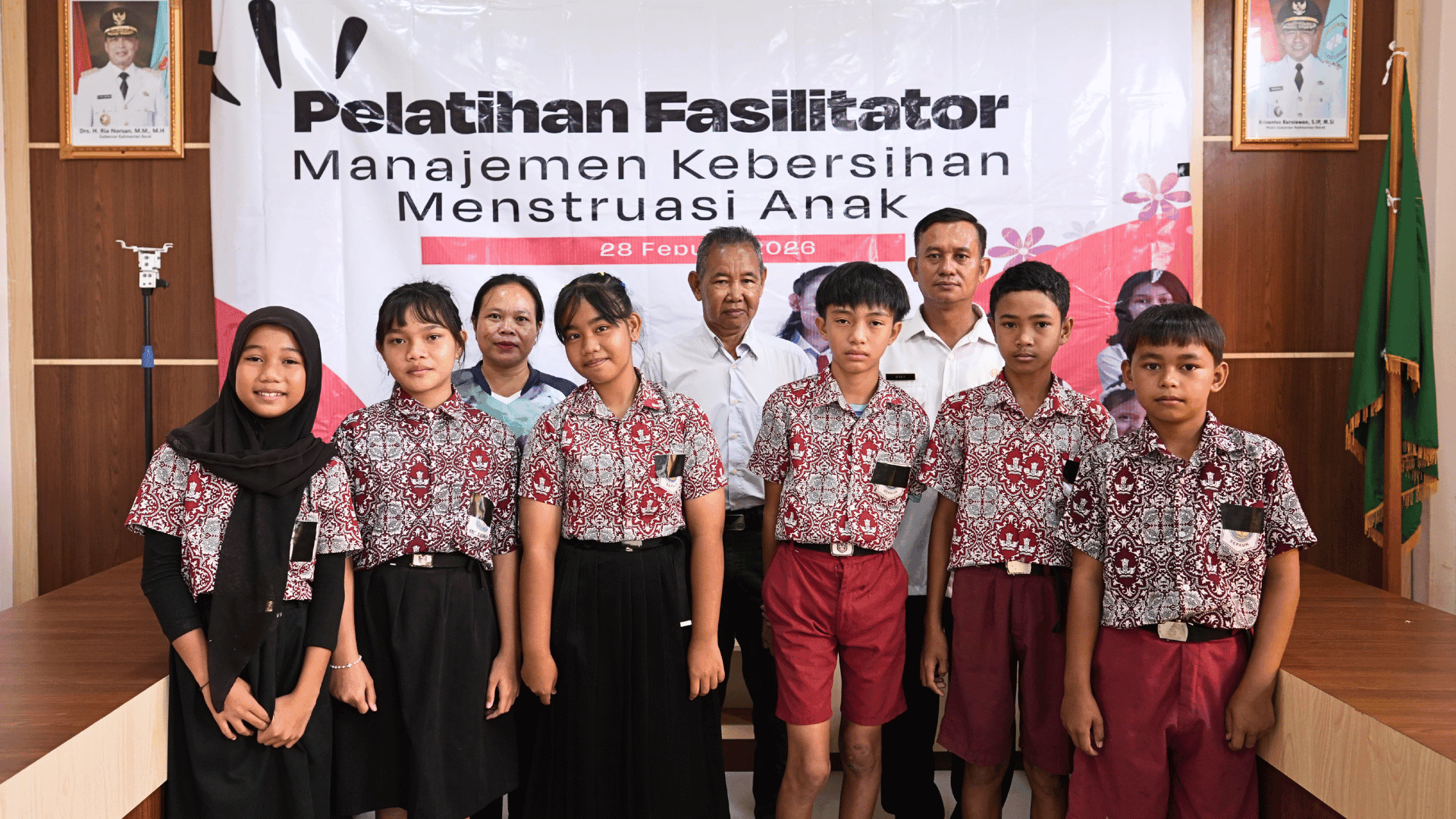
Gradually, the collaboration between WVI and the village successfully opened access to clean water at the school. The school toilets were renovated and more cubicles were added. Separate facilities for girls and boys were also established. In addition, training sessions about menstruation were held for the students. Dira was one of the participants. She was trained to become a facilitator for menstrual hygiene management at her school.
At first, Dira felt hesitant and shy when she was chosen to join the training. However, the educational yet cheerful atmosphere helped to break down her anxiety. The materials delivered by the facilitators enabled Dira to understand the phases of menstruation, how to maintain reproductive health, hormonal cycles, and the difference between myths and facts about menstruation. She also learned an important lesson about the benefits of using clean sanitary pads and having access to safe water.
After the training, Dira became a source of information about menstruation for her friends at school. She felt nervous at first, but her desire to share knowledge could no longer be held back. She also did not want any of her friends to be bullied because of menstruation ever again.
“Friends, menstruation is nothing to be ashamed of,” Dira said. She also explained how to track the menstrual cycle and the importance of supporting one another, both girls and boys, rather than teasing. The boys listened carefully as well. They began to learn to respect others more.
Now, Dira feels happy and proud of herself for having the courage to speak about a topic she once avoided. For her, menstruation is no longer something frightening, but a normal part of growing up as a girl.
“I used to hide behind my lack of knowledge, but now I stand tall because of it. Understanding my own body is the best way to love myself,” Dira concluded.
Author: Hotson Fiago (WASH BP Programme Officer in Sintang)
Editor: Mariana Kurniawati (Communication Executive)