
A child sponsorship programme for education does not merely support learning activities; it also addresses the various interconnected factors that influence a child's overall development. Education is deeply linked to health, protection, family wellbeing, and the environment in which a child grows.
Consequently, many sponsorship initiatives adopt a long-term approach engaging the child, family, and wider community to deliver structured, intentional support. Understanding how these elements connect helps prospective sponsors evaluate whether a programme aligns with their giving objectives.
We believe quality education cannot be separated from a child's basic needs. Learning opportunities are optimized when children are healthy, feel safe, receive strong family support, and grow in a nurture-focused environment.
Why Does Child Education Require Holistic Support?
Learning is an interconnected process. School attendance, concentration, enthusiasm, and educational participation fluctuate depending on a child's overall living conditions.
Therefore, an approach focusing on a single need may not fully address underlying challenges. Education depends heavily on health, safety, family stability, and community surroundings. When one element suffers, a child's learning process is inevitably affected.
Children's Needs Interlock to Shape Learning
A child’s physical health directly impacts academic capacity. Children receiving proper nutrition and healthcare enjoy better opportunities to engage fully in school. Conversely, poor health leads to frequent absences and reduced focus.
Alongside health, personal safety is crucial for development. A protective environment builds a child's confidence to participate in class, interact with peers, and unlock potential.
Simultaneously, family backing ensures educational continuity. Families understanding the value of schooling establish study habits at home, encourage progress, and support ongoing participation.
Educational Barriers Often Stem from Surrounding Environments
Not all educational hurdles originate from the child. Environmental factors heavily dictate learning opportunities.
For instance, clean water access maintains child health, directly boosting school readiness. In remote regions, safe transit to school remains a primary challenge. Other areas still lack adequate learning spaces or standard facilities.
Because local conditions vary widely, reputable education programmes assess community-specific priorities before designing on-the-ground interventions.
How Child Sponsorship Programmes Support Education
Generally, child sponsorship for education operates through a community-based development model. Sponsor contributions fund structured programmes designed to support children alongside their families and local communities. This strategy moves beyond isolated assistance to address the holistic factors shaping child growth.
Supporting Access and Educational Activities
A primary element of sponsorship focuses on learning access and literacy. Based on official details regarding Wahana Visi’s Child Sponsorship Programme, interventions include literacy campaigns, child capability building, and activities expanding access to quality education.
Interventions vary across target areas based on community requirements. Not all children receive identical items; programmes are tailored to local priorities identified in each region.
Supporting Child Health and Nutrition
Physical health underpins classroom readiness. Consequently, sponsorship initiatives regularly incorporate health monitoring and nutritional education.
This approach builds a solid foundation for developmental progress. Prioritizing health enables children to attend school more consistently through tailored local interventions.
Promoting Child Protection and Participation
A safe environment gives children the confidence to learn, play, and develop their capabilities. Therefore, child safeguarding forms an integral pillar of long-term development work.
Through localized activities, programmes promote child rights while creating safe platforms for youth participation. This creates a positive atmosphere where children pursue their studies securely.
Strengthening Families for Educational Sustainability
Long-term educational success relies heavily on the home environment. Family stability plays a vital role in ensuring children remain in school.
Accordingly, sponsorship programmes engage families in capacity-building initiatives. These include parental education, child development awareness, and positive parenting practices. In selected areas, initiatives also incorporate household economic empowerment to foster long-term resilience.
Mentoring formats differ by location, adapting strictly to local community conditions without promising uniform outcomes for every household.
Fostering Supportive Local Environments
Beyond the immediate family, the broader community shapes a child’s educational journey. Communities actively prioritizing child rights, health, and protection foster healthier environments for youth development.
Through community-based models, sponsorship initiatives engage local leaders and stakeholders to cultivate positive social habits, raise awareness, and build child-friendly spaces.
This collective approach ensures sustainable change, recognizing that lasting impact depends heavily on the daily environment surrounding the child.
Long-Term Support Ensures Lasting Educational Impact
Education is a multi-year journey, and a child’s needs naturally evolve over time. Long-term developmental programmes are structured to adapt to these changing stages while regularly monitoring progress.
This sustained timeline enables organisations to execute structured interventions and measure performance against clear milestones.
Evolving Needs Over Time: As children grow, their primary requirements shift. Early stages may prioritize school readiness, whereas later stages focus on skills development, protection, health, or secondary education pathways. Flexible programming keeps interventions relevant to local priorities.
Continuous Monitoring and Evaluation: Sustainable execution relies on regular review. Collected data helps organisations track operational progress and evaluate whether activities align with strategic goals.
Accountability to Supporters: Prospective sponsors can review programme reports, activity updates, and progress indicators. Transparent reporting provides accountability while demonstrating long-term impact over time.
The Sponsor’s Role in Educational Programmes
In a child sponsorship model, sponsors fund systemic solutions managed by the organisation. Contributions support community-wide initiatives, benefiting sponsored children alongside their peers, families, and local surroundings.
Understanding this operational framework provides prospective sponsors with realistic expectations regarding fund allocation. It highlights how education forms part of an interconnected matrix alongside health, protection, family empowerment, and community development.
Evaluating a Child Sponsorship Programme for Education
Before choosing a sponsorship programme, take time to evaluate the following core criteria:
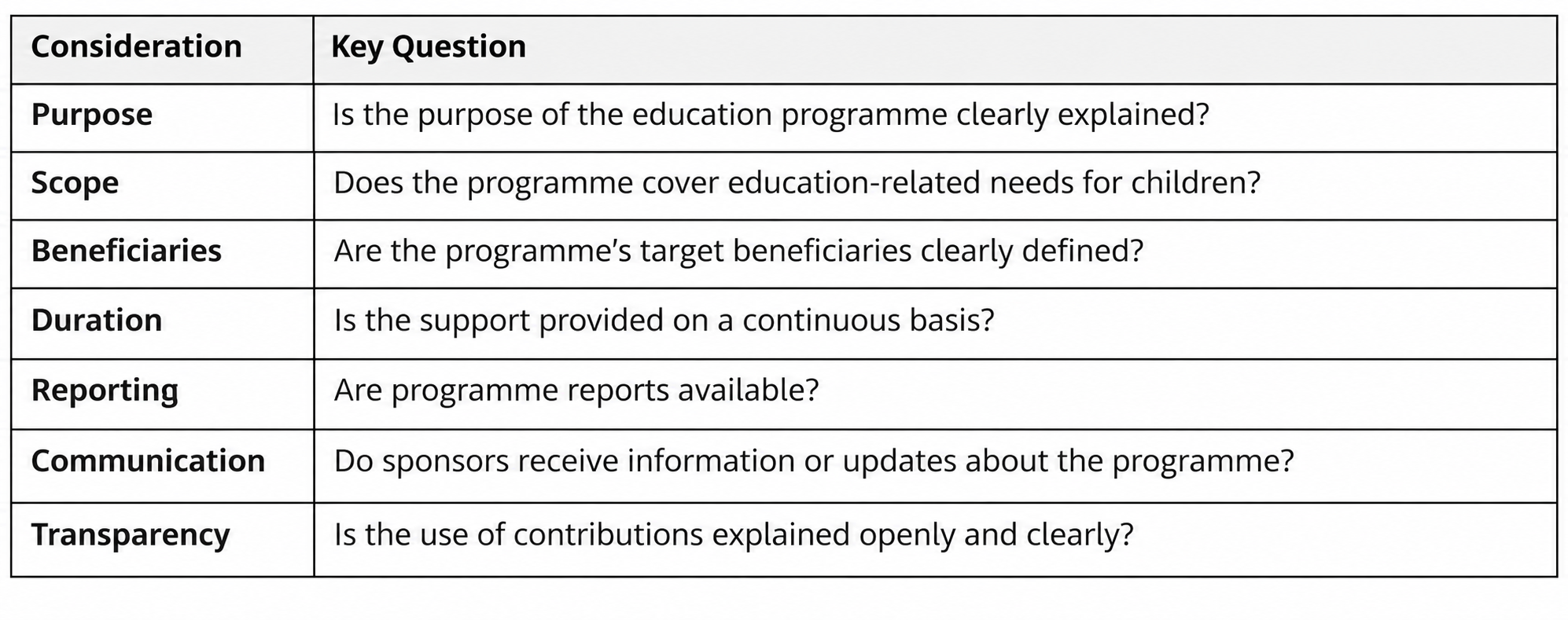
This simple checklist can help you compare multiple programmes more objectively. By evaluating the goals, scope, duration, transparency, and reporting together, you can determine whether a programme aligns with your intended contribution goals.
Discover Wahana Visi’s Child Sponsorship Programme
You now understand that a child sponsorship programme for education focuses not only on learning activities, but also addresses various interconnected factors supporting a child’s development—from health and protection to family stability and the surrounding community. This holistic approach serves as an important consideration when evaluating sponsorship options before deciding to join.
Children’s education requires interconnected support. Discover Wahana Visi’s Child Sponsorship Programme and consider a level of contribution that suits your readiness.