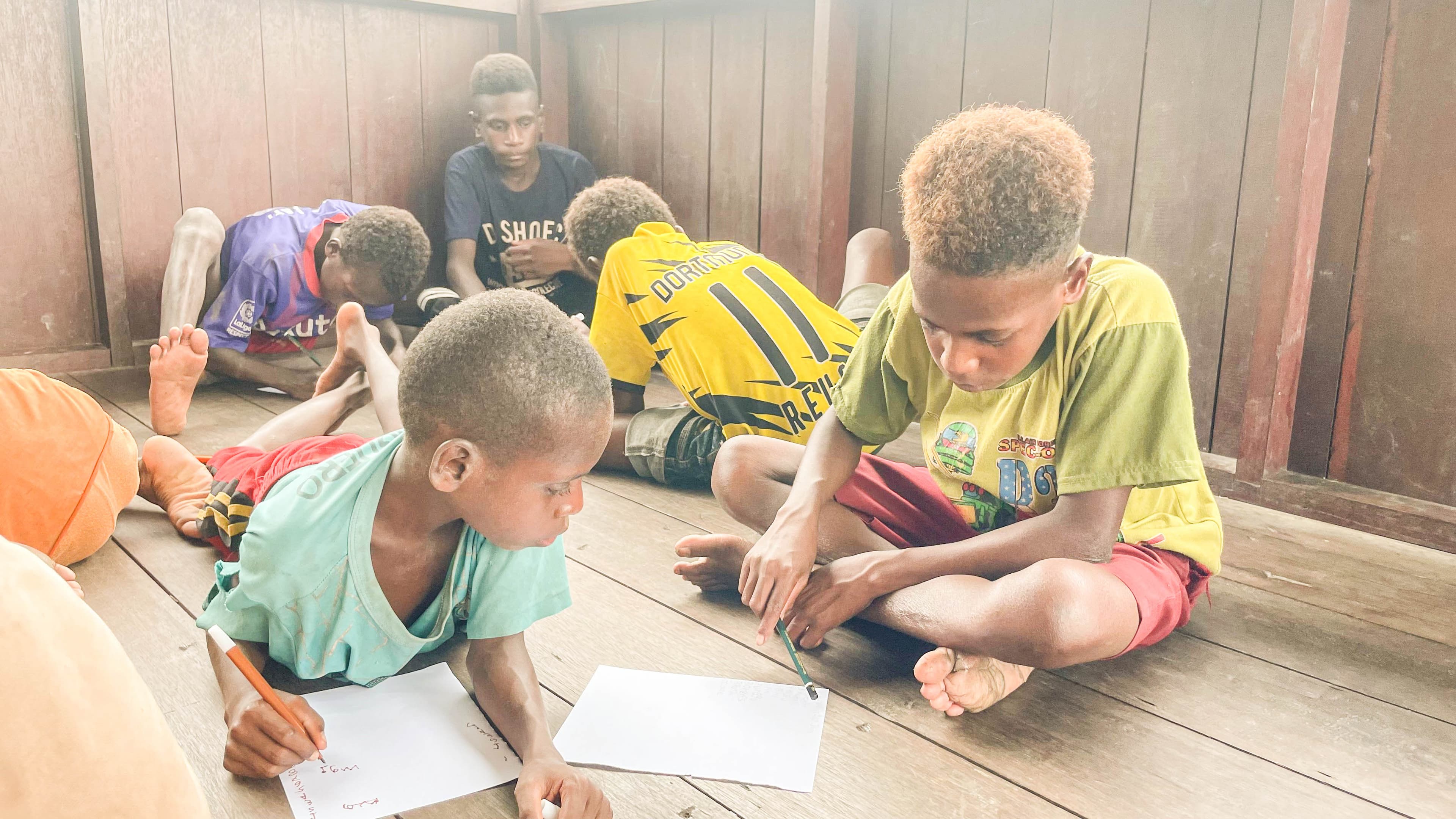
Not all educational donations generate the same long-term impact. This difference is influenced by various factors, such as programme objectives, the form of support provided, implementation duration, and how an organisation monitors and measures its results. Understanding the nature of each programme is therefore a vital first step before choosing to donate. Amid Indonesia's current educational challenges—such as disparities in access, learning quality, and limited facilities in certain regions—every form of support plays a distinct role tailored to specific needs.
For us, choosing a donation programme is not merely about making a contribution, but also about understanding how the initiative is designed to address educational challenges in a targeted manner. By recognising the factors that influence programme outcomes, prospective donors can make well-informed decisions based on comprehensive information.
Why Does the Impact of Educational Giving Vary?
Educational issues do not stem from a single root cause. In one region, the primary challenge might be restricted physical access to schools. In another area, the more pressing need could involve learning facilities, teacher availability, technology integration, or family and community support.
Because each region faces unique conditions, no single donation model can address every challenge. For example, a programme focused on providing learning materials serves a different purpose than one designed to build teacher capacity or provide academic mentoring to children.
Consequently, the impact of educational giving must be understood within the context of the specific programme being run. Evaluating a programme’s success should be based on its predefined objectives from the outset, rather than simply on the total funds raised or the number of activities conducted.
Every Programme Addresses a Different Issue
Educational donation programmes can be designed to tackle a wide variety of needs. Some programmes assist with funding school expenses, others provide learning facilities, some focus on enhancing teacher quality, while others offer structured mentoring for children and their learning environments.
These differing focus areas directly shape the expected outcomes. For instance, facility provision aims to build a better learning environment, whereas teacher training seeks to enhance the quality of instruction. On the other hand, mentoring programmes are structured to support a child's development through phased, ongoing activities.
Each approach plays its own vital role. Therefore, it is inaccurate to assume that one donation model is inherently superior to another. What matters most is ensuring that the programme has clear objectives aligned with the specific problem it aims to solve.
Programme Duration Shapes the Type of Results
Beyond overall objectives, implementation timeframe also influences the type of results a programme can achieve.
Short-term programmes are generally designed to address immediate, urgent needs—such as distributing school supplies or providing educational relief during specific periods. Conversely, longer-term programmes are typically structured to support changes that require a gradual process, such as improving instruction quality or mentoring child development.
These differing timeframes mean that success indicators also vary. Short-term initiatives can be evaluated by the immediate delivery of target provisions, whereas long-term programmes require regular, periodic monitoring to track progress against planned goals.
Diverse Models of Educational Giving and Their Impact
There are various forms of educational donations available to the public. Each model carries a distinct focus and potential outcome, making it important to understand these nuances before choosing how to contribute.
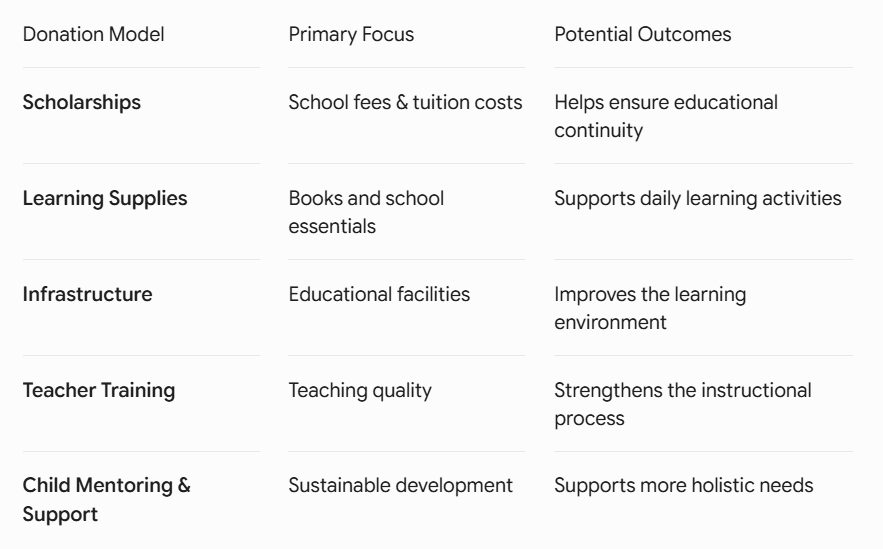
Direct assistance is designed to address directly identifiable needs, such as school fees, books, stationery, or other learning supplies. Support of this nature helps reduce the immediate barriers children face in attending school, aligned with specific programme goals.
However, the impact of direct assistance should be evaluated strictly against its original targets. For instance, if a programme aims to supply learning equipment, its success is measured by whether those materials were delivered and used—rather than linking it immediately to long-term systemic changes that are influenced by numerous external factors.
Sustainable Approaches Require Ongoing Support and Mentoring
Not all educational challenges can be resolved through a single, one-off intervention. Certain needs demand a phased, step-by-step process, requiring programmes built around long-term mentoring and continuous support.
For example, a child's learning progress is shaped by interconnected factors, including family support, the quality of the learning environment, and sustained access to education. For this reason, many programmes move beyond simple aid distribution to deliver structured activities that nurture the learning process over an extended period.
This approach is not inherently superior to direct assistance. Rather, each model serves a distinct purpose tailored to specific objectives. What matters most is ensuring that the nature of the support matches the problem it aims to solve.
Factors That Drive Long-Term Impact
Evaluating the impact of educational donations requires looking beyond the total funds raised or the number of activities held. Programmes designed for long-term benefit typically feature clear objectives, structured implementation, and periodic measures of progress.
Given Indonesia’s diverse educational challenges—such as regional disparities in access, teaching quality, and varying socio-economic conditions—programmes must also adapt their approach to local needs. Prospective donors should consider the following key aspects before choosing an educational programme:
Clear Objectives and Defined Beneficiaries: A reputable organisation clearly explains the educational challenge it aims to address and the expected outcomes. Pay attention to who the beneficiaries are and where the programme operates, as detailed target groups and clear locations reflect a well-planned initiative.
Ongoing Monitoring and Reporting: Effective programmes do not stop at activity execution; they actively monitor progress and share results through accessible updates and reports. Look for transparent reporting periods, data sources, and evaluation methods that show how progress is tracked against original goals.
Alignment with Local Needs: Educational hurdles vary significantly by region. One area may desperately need upgraded facilities, while another requires teacher training or family support to keep children in school. Interventions tailored to local conditions ensure support addresses genuine, on-the-ground issues rather than applying a one-size-fits-all model.
Questions to Ask Before Choosing an Educational Donation
Before committing your support, take time to evaluate the programme using these guiding questions:
What specific educational problem does this programme aim to solve?
Who are the primary beneficiaries?
How are donation funds allocated across programme activities?
What is the planned duration of the programme?
What key indicators are used to measure success?
Are progress reports accessible and easy to understand?
How does the organisation evaluate long-term impact?
Does the programme engage families or local communities in its execution?
Answering these questions clarifies the nature of a programme before you contribute, making it easier to compare donation options based on goals, execution, and organisational accountability.
Understanding the Future Impact of Your Giving
Every model of educational donation carries a distinct focus, scope, and character. Some are built for immediate relief, while others focus on long-term support and development. Evaluating impact must therefore align with each programme's specific objectives.
To learn more about how sustained support creates lasting change, explore our examples of real-world outcomes achieved through our educational initiatives.
Now that you understand how different donation models drive unique outcomes, discover how your support creates tangible, lasting impact for the future of children in Indonesia.