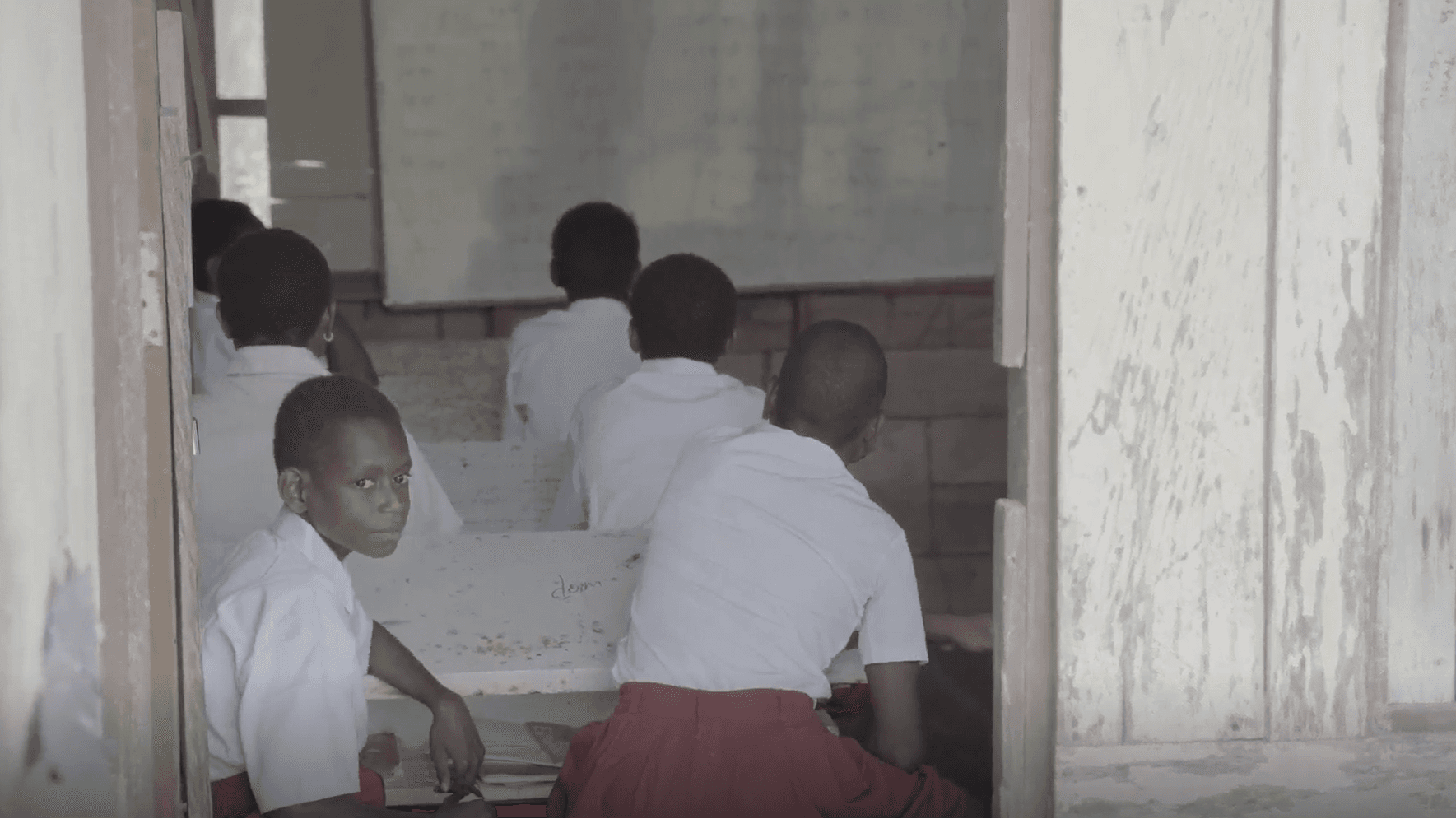
Children in remote area education need sustainable support because learning continuity is influenced by many factors, ranging from access to school, the availability of facilities and teaching staff, to family and environmental conditions. Therefore, educational support is not enough to be provided just once, but needs to be adapted to continuously evolving needs so that children can keep learning optimally.
We understand that equitable education does not depend solely on the availability of schools. Learning continuity is also influenced by transport access, educational facilities, teacher availability, family support, and the environmental conditions where children grow up.
By understanding these various challenges, the public can see why educational support needs to be carried out consistently. A sustainable approach helps accommodate children's needs at every stage of education while supporting a better learning environment.
Understanding Education in Remote Areas
Before understanding the challenges children face, it is important to know the definition of a remote area in the context of education. In general, a remote area is a region located relatively far from service centres and facing limited access to transport, infrastructure, or basic services, meaning that the community requires greater time and effort to obtain various services, including education.
These conditions can affect children's learning activities. For example, the journey to school takes longer, access to learning materials is more limited, or educational services are not always readily available.
It should also be understood that remote areas are not necessarily the same as 3T regions (frontier, outermost, and disadvantaged regions). Both terms relate to development challenges, but they have different scopes. Understanding the differences helps us view educational needs more accurately according to the conditions of each region.
Characteristics of Remote Areas
Remote areas are generally located relatively far from public service centres. Access to these regions can be affected by road conditions, transport availability, or geographical barriers such as mountains, archipelagos, forests, or bodies of water.
Aside from distance, infrastructure is also a frequently encountered characteristic. The availability of electricity, communication networks, and public facilities may differ compared to more easily accessible regions. However, the conditions of each area are not always identical, so their educational needs may also vary.
Remote Areas and 3T Regions
The term 3T stands for terdepan, terluar, dan tertinggal (frontier, outermost, and disadvantaged). In development policy, this term is used to describe regions that face specific challenges in service access and development.
Nevertheless, not all remote areas fall into 3T regions, and not all educational challenges occur exclusively in 3T areas. In the context of education, what matters more is understanding the actual conditions in each region, such as access to school, teacher availability, learning facilities, and community support. Consequently, educational needs can be understood based on local situations rather than simply regional labels.
Challenges of Education in Remote Areas
The continuity of children's learning in remote areas is influenced by various interconnected challenges. Here are several of them.
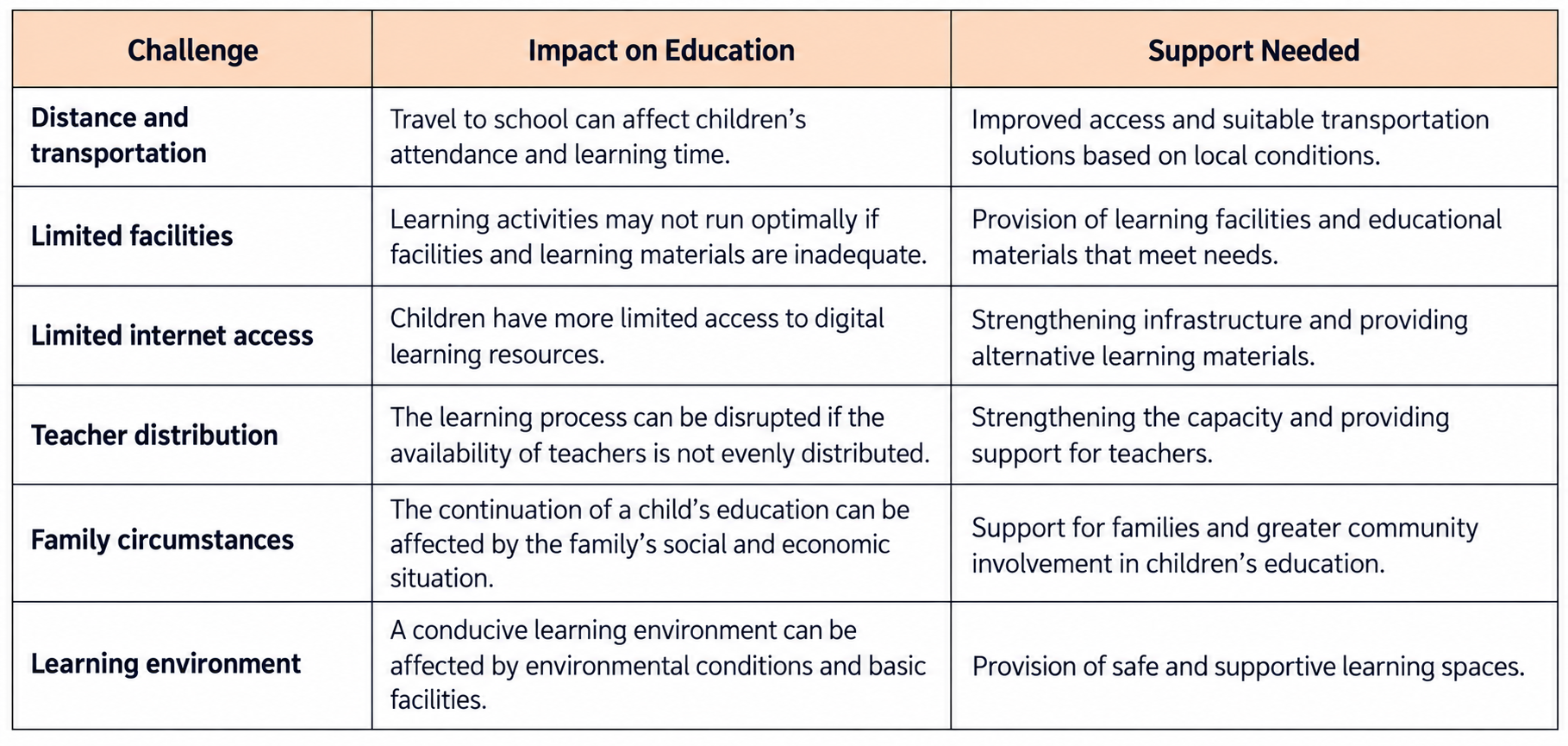
These various challenges do not stand alone. For example, limited transport access can affect teacher distribution as well as the availability of learning materials. Similarly, limited facilities can impact the comfort of the learning process. Because they are interconnected, the need for educational support in each region can vary according to the conditions faced by the community.
Why Educational Support Needs to Be Sustainable
Meeting children's educational needs cannot be done in a short time. As they grow older and progress through educational stages, their learning needs also change. Therefore, support carried out sustainably helps ensure that children continue to have learning opportunities aligned with their developmental stage.
Beyond meeting ever-changing needs, consistent support also plays a role in maintaining educational access, improving the quality of the learning environment, and strengthening mentoring from families, schools, and communities. An approach like this helps create a more continuous learning process without promising specific academic outcomes.
Children's Needs Change According to Educational Stages
Every educational stage has different requirements. Early childhood requires a safe learning environment that supports basic development. Upon entering primary school, needs may shift towards books, stationery, and adequate learning facilities. Entering the next stage, children may need more diverse learning materials, study mentoring, or support to develop skills.
These changing needs show that educational programmes need to adapt their forms of support over time. With an appropriate approach, assistance can remain relevant to the child's development and the conditions of their surrounding environment.
Improving Access Requires a Phased Process
Improving educational access is not only about building or providing facilities. Improvements also require planning, maintenance, and cooperation among various parties so that the benefits can be felt over the long term.
Schools, families, communities, and other stakeholders play complementary roles in supporting this process. Consequently, programme progress needs to be monitored periodically to see whether the support provided still aligns with community needs and can continue delivering benefits.
Mentoring Helps Maintain Learning Continuity
Aside from access and facilities, mentoring is a vital part of maintaining children's learning continuity. Support from families helps build study habits at home, while mentoring from teachers and communities can create a safer and more conducive learning environment.
The form of mentoring can also differ across regions. Some communities may need a stronger focus on reinforcing the family's role, while others require support to create a more comfortable learning environment. By understanding local conditions, mentoring can be tailored to be more relevant to the needs of children and the community.
Learn About Educational Challenges in Disadvantaged Regions
You now understand that education in remote areas is influenced by various factors, ranging from school access, facilities, and teaching staff to family and environmental support. These diverse challenges demonstrate that maintaining learning continuity requires consistent support adapted to the needs of each region.
If you wish to learn more about the challenges children face in disadvantaged regions, you can explore the educational challenges in disadvantaged regions and the various steps that can support children.