Educational and health sponsorship helps meet children’s needs through continuous long-term support. This approach not only facilitates learning access, but also addresses health, nutrition, child protection, and the essential roles of families and communities, ensuring children grow up in a nurture-focused environment.
We view education and health as two intrinsically linked needs. A healthy child is better prepared to engage in learning, while education helps foster the knowledge and habits that support long-term wellbeing.
Through child sponsorship programmes, long-term guidance is delivered by engaging children, families, schools, and communities. This holistic strategy enables interventions to be tailored to local priorities while progress is monitored on a regular basis.
Why Must Education and Health Be Supported Together?
Education and health continuously influence each other throughout a child's development. When health is safeguarded, children enjoy better opportunities to participate actively in school. Conversely, education plays a vital role in shaping healthy living habits through practical knowledge applied in daily life.
This relationship demonstrates that supporting a child cannot be limited to a single isolated area. Classroom learning requires good physical health, whereas child wellbeing is equally shaped by school environments, daily routines, and family encouragement. Therefore, an integrated approach linking education and health is essential for fostering comprehensive child development.
How Child Sponsorship Addresses Interconnected Needs
Simply put, child sponsorship is a long-term developmental framework supporting children through regional projects where they live. Assistance is not provided to an individual child in isolation; rather, it is delivered through community initiatives involving families, schools, and local networks so that benefits are shared broadly.
This community-based model ensures activities adapt to local priorities. For instance, one area may require educational strengthening, whereas another may prioritize health improvements, child protection, or family capacity building. Understanding these distinct conditions allows programmes to remain relevant and effective.
Supporting the Child Alongside Their Environment
A child’s development is deeply influenced by their surrounding environment. Consequently, support extends beyond the child to include key figures in their daily life.
Families: Play a vital role in reinforcing healthy routines and study habits at home.
Schools: Provide formal education while fostering essential social skills.
Communities: Cultivate a safe, supportive atmosphere for youth development.
When these three elements work in harmony, children gain the opportunity to grow in a truly nurturing environment.
Support Delivered Through Long-Term Programmes
A child’s needs are not static. As children grow, their educational, health, and protection requirements evolve. Long-term support frameworks are therefore designed to adapt activities to match these shifting developmental stages over time.
Throughout the project lifecycle, community needs are periodically reviewed to inform relevant activities. Support formats vary across locations based on geography, social factors, and specific local challenges. Through this approach, educational and health sponsorship moves away from short-term relief, focusing instead on continuous support tailored to target project areas.
Areas of Support for Child Education and Health
Through child sponsorship, assistance is delivered across several interconnected pillars. This framework addresses a child's overall needs—from formal education to the broader community in which they grow.
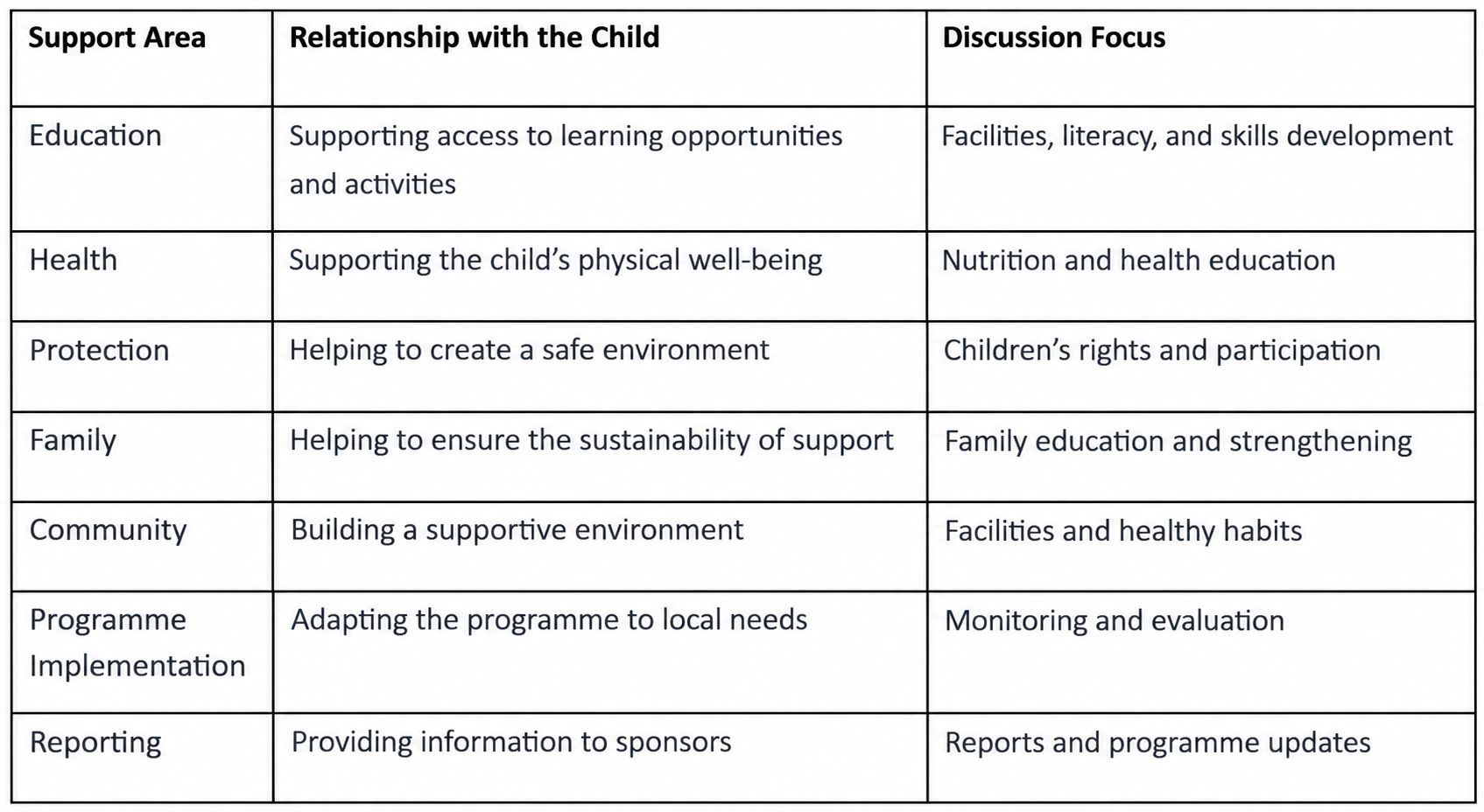
Children’s Access to Education and Learning Activities
One of the focuses of education and health sponsorship is to support children’s opportunities to learn. This support may include providing better learning environments, strengthening a culture of literacy, and facilitating activities that help children develop knowledge and skills appropriate to their stage of development.
Programmes may vary from one community to another, as they are adapted to local needs. This approach helps ensure that activities remain relevant to children and the environments in which they live.
Children’s Nutrition and Health
Health is an important part of supporting children’s learning. Children who receive adequate nutrition and understand healthy habits are better equipped to participate in their everyday learning activities.
For this reason, programmes may include health education, monitoring children’s growth, and strengthening families’ understanding of the importance of nutrition and health. This approach helps support children’s growth and development in a sustainable way.
Child Protection and Safe Environments
Children need safe environments in which they can learn, play and develop well. Therefore, child protection is an important part of programme support.
Activities may include increasing awareness of children’s rights, encouraging children’s participation in age-appropriate ways, and creating safer environments at home, at school and within the community. Supportive environments give children greater opportunities to participate comfortably in educational activities.
Strengthening Families and Communities
The sustainability of children’s education and health is also influenced by support from their families and surrounding communities. Therefore, programmes focus not only on children, but also involve families and communities.
Activities may include education for parents, strengthening the role of families in supporting children’s growth and development, and working with communities to build healthier, more child-friendly environments. This approach helps create sustainable support without promising specific changes to a family’s economic circumstances.
Why Is Long-Term Support Important for Children?
Children’s needs change as they grow and progress through different stages of education. Therefore, long-term programmes have the opportunity to adapt activities to meet evolving needs at each stage.
Long-term support also allows for regular monitoring and evaluation. The findings from this process provide a basis for assessing programme progress and adapting activities to ensure they remain relevant to the needs of children, families and communities.
What to Consider Before Becoming a Sponsor
Before joining a child sponsorship programme, you can consider the following aspects to gain a better understanding of the programme’s scope and approach.
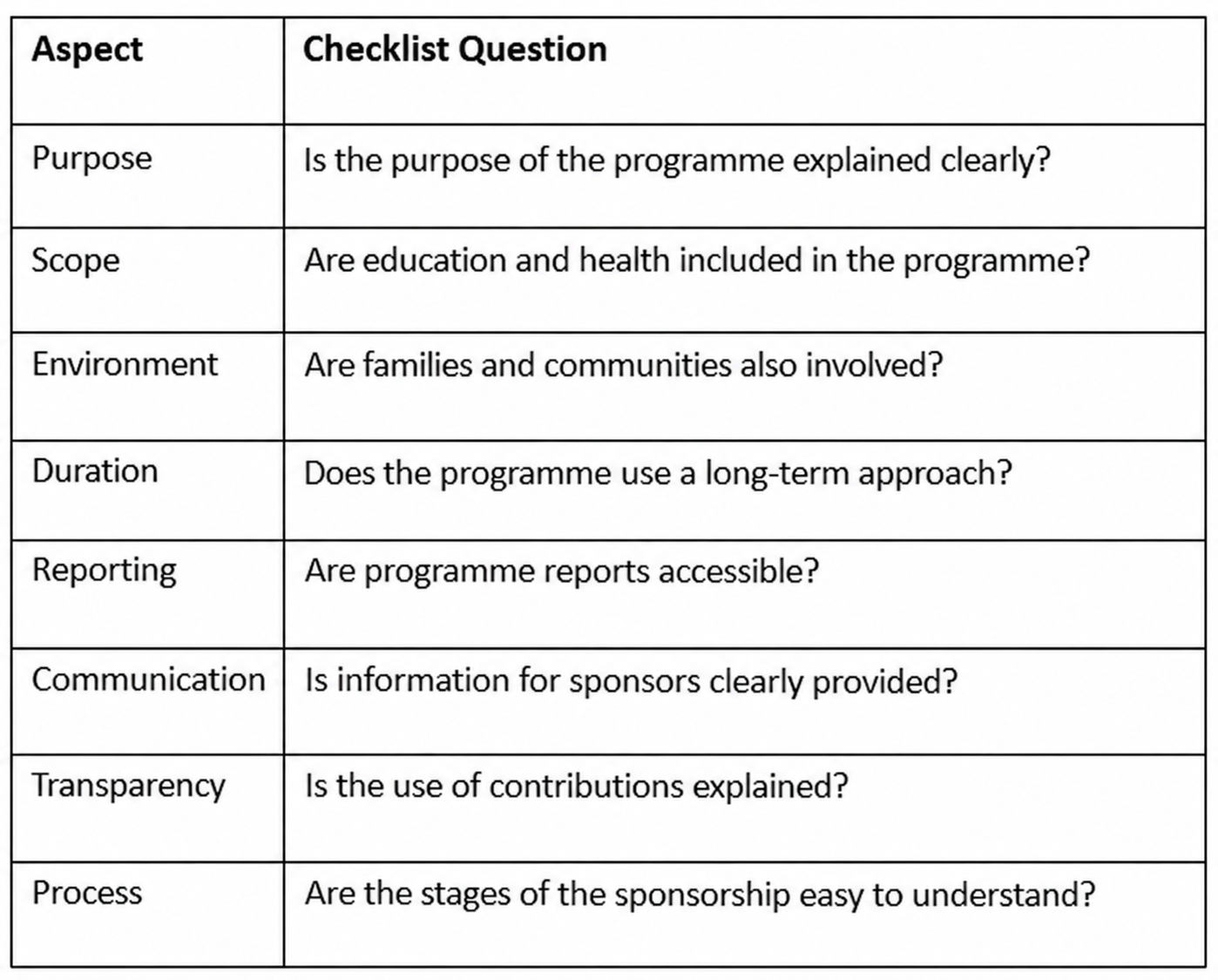
This simple checklist can help you compare programmes while ensuring all necessary information is readily available before making a decision.
Discover Wahana Visi’s Child Sponsorship Programme
You now understand that educational and health sponsorship supports far more than a child’s classroom needs alone—it nurtures their health, protection, family, and wider community through a long-term approach. You have also seen the importance of reporting, regular monitoring, and transparency within an effective guidance model.
You have seen how sponsorship supports every aspect of a child's development. Discover Wahana Visi’s Child Sponsorship Programme and take the next step at your own pace by exploring sponsored child profiles and our sponsorship process.