
The sea breeze carried the distinct scent of fishponds. In one of the vast expanses of water, the greenish surface rippled gently as a shoal of fish momentarily broke the surface. They scrambled for the feed Amaq had just scattered. He smiled, watching them eat ravenously; every day, they seemed to grow larger.
He asked a member of his group to fetch a net and cast it over the shimmering water. A few tilapia and milkfish were soon caught in the mesh. Looking at their size, Amaq was already calculating the income he would receive.
"I first started opening these ponds in 1996," said the Chairman of this Fish Farmers' Group.
More than twenty years ago, Amaq and several other residents tried to transform the coastal land into ponds. Their hope—that harvesting fish or prawns would provide a stable livelihood for their families—was dashed halfway through. For a decade, those ponds sat idle.
The self-funded construction of these ponds boomed during the rise of Vannamei prawn farming. In several coastal villages across Lombok, these independent ponds shared the same characteristics: small plots, no larger than 500 square metres. The locals excavated the coastal land near estuaries, often by felling the existing mangroves. Unsurprisingly, that era saw a surge in the conversion of mangrove forests into community fishponds, including in Amaq’s village in the East Lombok Regency.
Some ponds were dug using simple tools—hoes and shovels. Those with more money could afford to hire heavy machinery like excavators. Once the ponds were ready, they released prawn larvae and provided daily feed. Occasionally, fisheries extension officers would visit, but their presence was irregular and they did not provide specific, hands-on guidance for the farming activities.
"The Field Fisheries Officers only came once in a blue moon, and even then, it wasn't directly related to supporting the work in the ponds," he remarked.
As a result, the farmers had to learn through trial and error. Amaq still remembers when he joined the wave of prawn farming. At the time, Vannamei prawns were seen as a promising commodity. The dream of making a huge profit had been planted long ago, serving as Amaq’s primary motivation.
"But it wasn't successful," he said.
Loss after loss caused many farmers to finally give up. Some of the land was abandoned once more, while other parts were only used sparingly. The failure of the ponds was not merely an economic issue; it left behind a lingering doubt about trying again. To this day, some of those ponds remain derelict.
Guidance that Changed the Tide
The winds of change began to blow when a structured support programme reached the community. Through the MARVEL (Mangrove Adaptive and Resilient Village for Enhanced Livelihoods) project—initiated by Wahana Visi Indonesia (WVI)—fish farmers began receiving regular guidance. Working through their farmer groups, they were provided with training, mentoring, and fresh insights into more sustainable pond management.
"We are being helped immensely now by WVI’s programme through the silvofishery groups," Amaq said.
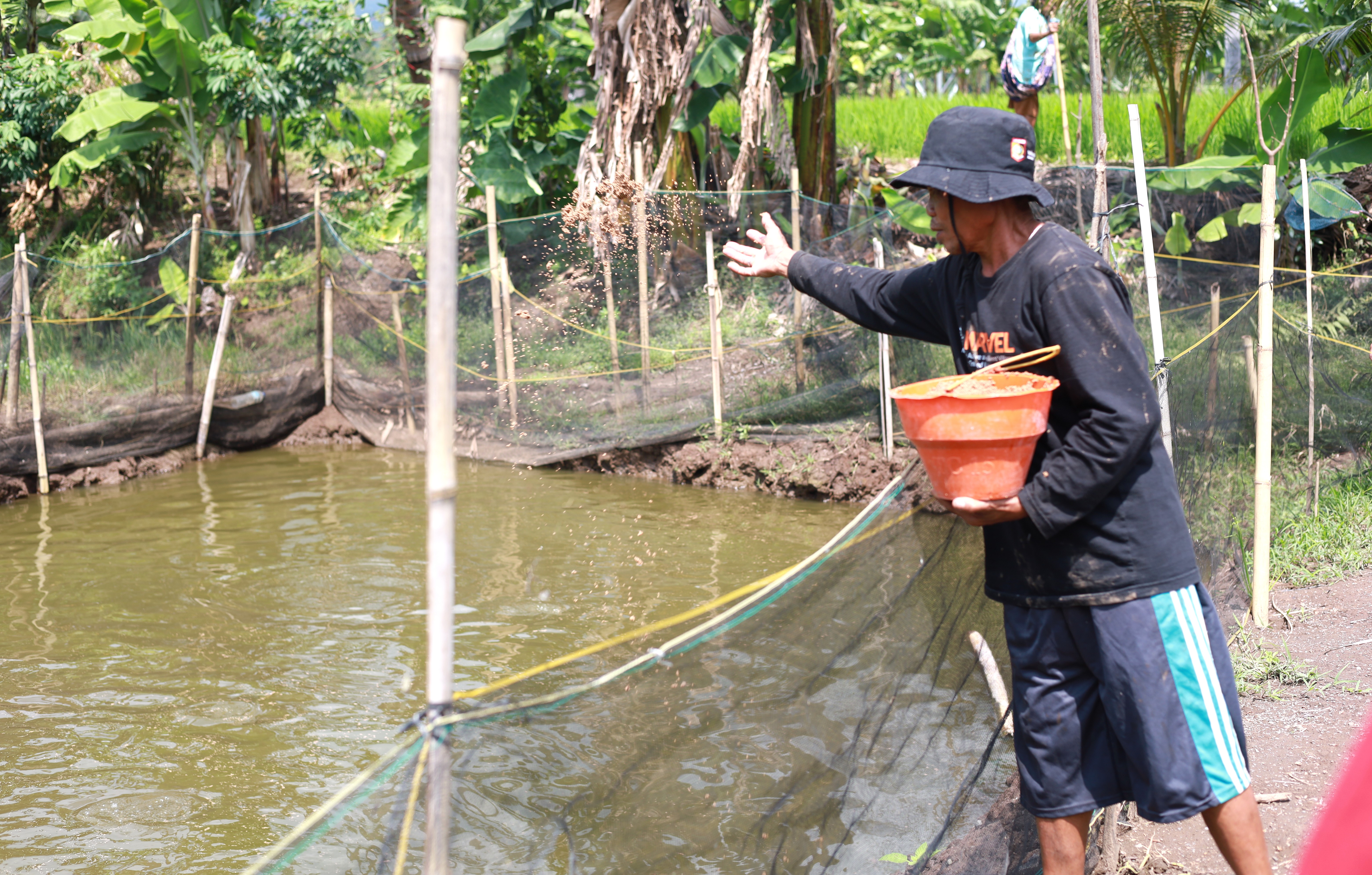
Silvofishery is a traditional pond system that integrates aquaculture with the planting or management of mangrove forests. This system yields positive results for both the environment and the local economy. Essentially, as mangroves return to the coast, marine biodiversity follows, creating new income opportunities. While in the past farmers felled mangroves to build their ponds, they are now replanting them. Some are even planting mangroves directly within the ponds themselves.
"We now know that if the mangroves are healthy, they become a prime feeding ground for fish," he explained.
In these ponds, the approach goes beyond just fish farming; it connects various elements such as waste management, feed production, and coastal ecosystem restoration. This is clearly visible at the demonstration plot managed by Amaq’s group. On his land, there are facilities for feed processing and organic waste treatment using maggots. The farming process is now much more methodical; farmers receive training on water quality, feed management, and maintaining fish health.
"It is a huge help to us now," he remarked.
Currently, the ponds managed by the group focus on two primary species: milkfish and saline tilapia. Milkfish are known for being highly adaptable to pond conditions, while saline tilapia is a variety specifically capable of thriving in brackish water. Amaq pointed out the difference between regular tilapia and the saline variety in his pond: regular tilapia has thinner fillets, whereas the saline variety is much meatier.
"Thanks to this guidance, we’ve learned which types of tilapia are actually suitable for this environment," he said.
The milkfish and saline tilapia are now approaching four months old. The fish have grown significantly and can be seen darting actively across the surface of the ponds. The farmers are currently researching market prices for milkfish to use as a benchmark for the upcoming harvest. However, even before the official harvest, several locals have already expressed interest in buying.
One of the most fascinating aspects of the programme is the use of household waste for maggot cultivation. In a corner of the pond area, several simple containers are lined up. Inside, piles of organic waste are being decomposed by the larvae of the black soldier fly (BSF), commonly known as maggots.
While many see waste as a nuisance, this farmer group views it as a valuable resource.
"In silvofishery, we are encouraged to breed maggots because they provide an excellent source of fish feed. They’re also great for the chickens," he said, gesturing towards the free-range poultry kept at the site.
Maggots are high in protein, making them an ideal feed for both fish and poultry. Furthermore, maggot farming helps reduce the volume of organic waste in the village. Kitchen scraps that were once discarded are now collected and used to nourish the larvae.
Restoring Ecological Balance
Maggot cultivation does more than just provide cheaper feed for fish and poultry; it has become a vital part of the effort to improve the village environment. Before the intervention, village waste was often poorly managed—either burnt or simply discarded.
"After the training, study tours, and various guidance, waste management has improved significantly," Amaq noted.
Alongside maggot farming, the community has begun developing "waste bank" initiatives as part of household waste management. These small steps are gradually shifting the local mindset, viewing waste not as a nuisance, but as a new resource.
The village programmes aren't solely focused on silvofishery ponds. Along the shoreline, residents are planting mangroves to restore the coastal ecosystem. For the fish farmers, mangroves are essential for maintaining coastal balance; their roots help trap sediment and reduce erosion while providing a habitat for diverse marine life. A healthy ecosystem around the ponds also improves the water quality used for aquaculture.
"In addition to the ponds, there are mangrove planting activities," said Ali, a fish farmer involved in the conservation efforts.
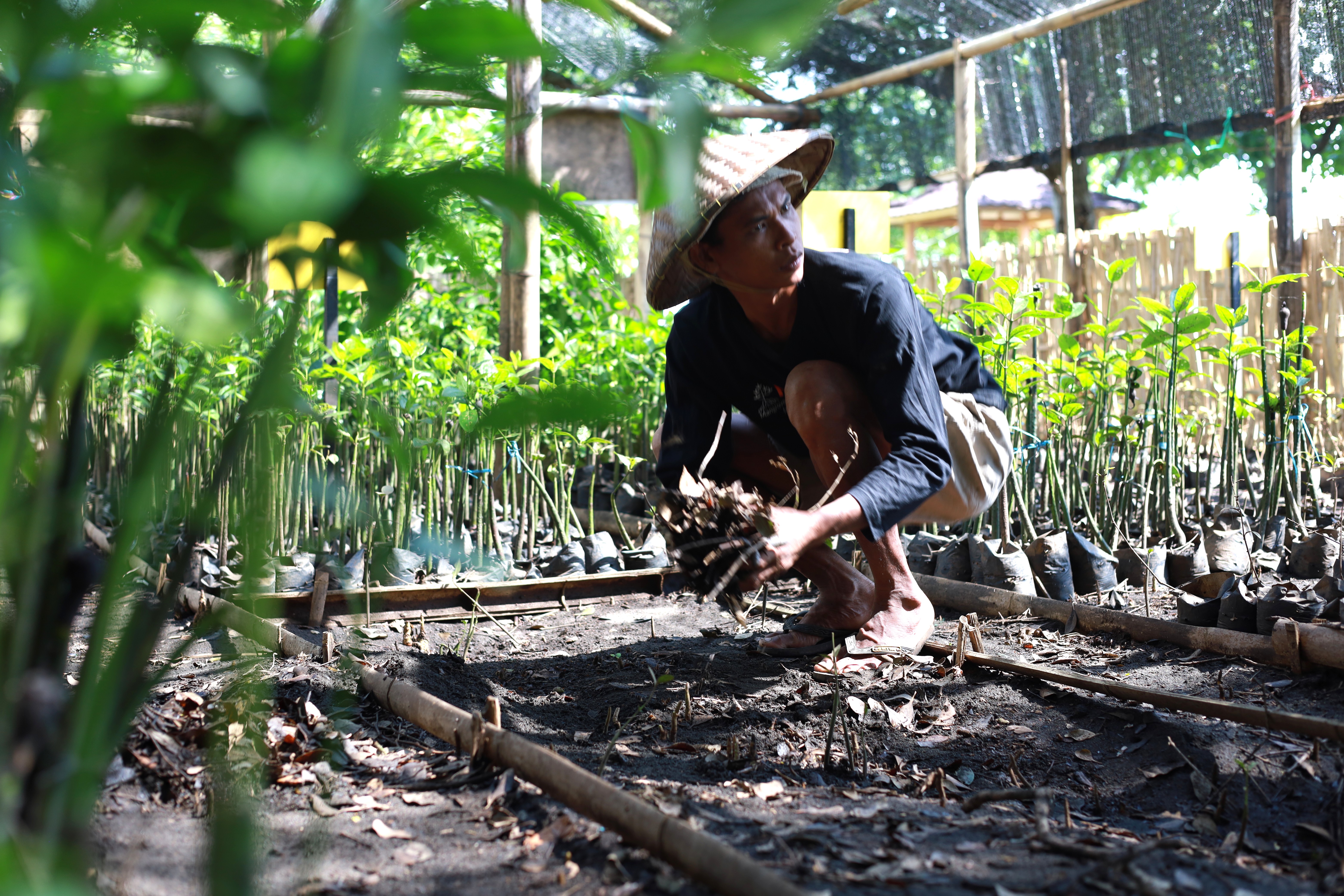
Ali’s home happens to be near a mangrove nursery supported by WVI. Together with his father-in-law, Ali never misses a session, and his own pond serves as one of the silvofishery demonstration plots. Having felt the benefits of a thriving mangrove forest, Ali is a constant fixture at conservation events, from seedling preparation to planting.
"I also forage for crabs around the mangroves," he added.
At high tide, Ali sets out with kodong (traps) made of netting and iron frames, baited with chicken or fish scraps. As the tide ebbs, he retrieves them. Every time he goes out, he returns with a catch, which he sells to a regular wholesaler.
This crab selling provides a daily income for his family, while the pond harvests serve as long-term savings. Ali is well aware that his easy access to crabs depends entirely on the health of the mangroves.
"Sometimes I set the traps near the ponds. It'll be even better once the mangroves have fully grown," he said.
Trigona Bee Farming in the Mangrove Forest
Beyond aquaculture, the mangrove ecosystem offers another economic boon: Trigona bee farming. Given the potential of East Lombok's mangrove areas, farming these stingless bees is highly profitable, as their honey and propolis command a high market value. The process is also relatively straightforward, as this particular species does not sting.
The Sulang Trigona honey group is one of the groups mentored by WVI through the MARVEL programme. They cultivate the bees in two locations: within the mangrove forest and in their own back gardens.
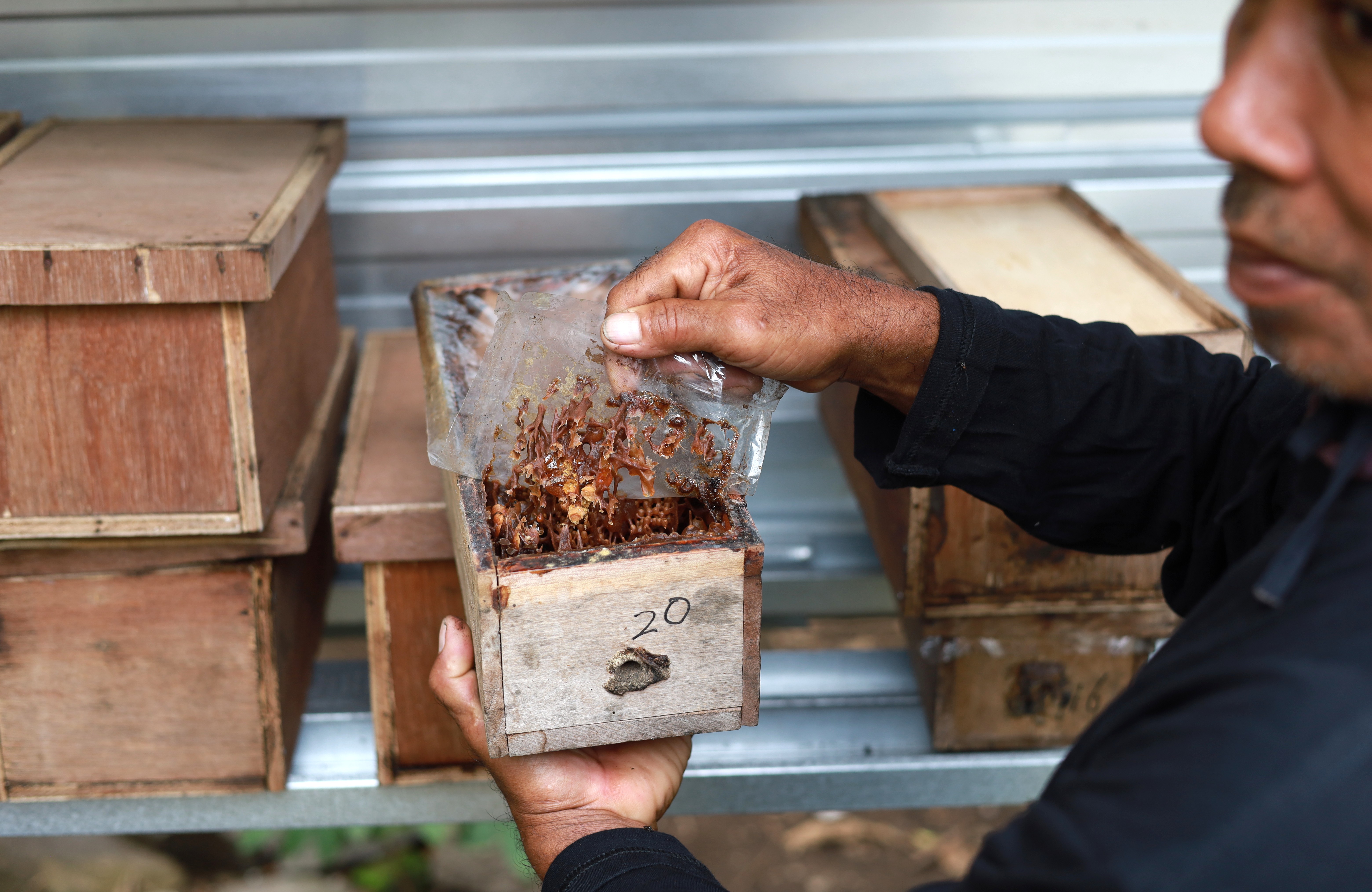
Aliman, the group leader, initially received training on how to breed the bees, identify their food sources, move colonies, and harvest the honey. Since then, the group has seen several successful harvests. They have even noted a distinct difference in flavour profiles between the two locations.
"The honey harvested from the mangrove forest has a slightly bitter note. That’s its unique selling point," Aliman explained.
These empowerment efforts have the full backing of the local authorities. The Head of the Village, Mustiadi, stated that the various programmes have brought a positive impact to the community.
"Over the two years these programmes have run in our village, we in the local government have been very pleased to cooperate," he said.
According to Mustiadi, the initiatives target more than just the economy; they focus on broad community empowerment. This includes silvofishery, bee farming, and women's groups that help families save and manage household finances. Other activities involve mangrove planting and engaging the Village Children’s Forum in conservation.
"This will certainly have a positive impact on the local economy and the development of human resources in our village," Mustiadi remarked.
However, he hopes the programmes will continue. In his view, two years is a very short time to build truly resilient change at the village level. "We sincerely hope this can be extended so that what has been started can continue to flourish," he concluded.
Author: Fathul Rakhman (Writer for MARVEL programme)
Editor: Maria Pratiwi (MARVEL Lombok Project Coordinator), Mariana Kurniawati (Communication Executive)