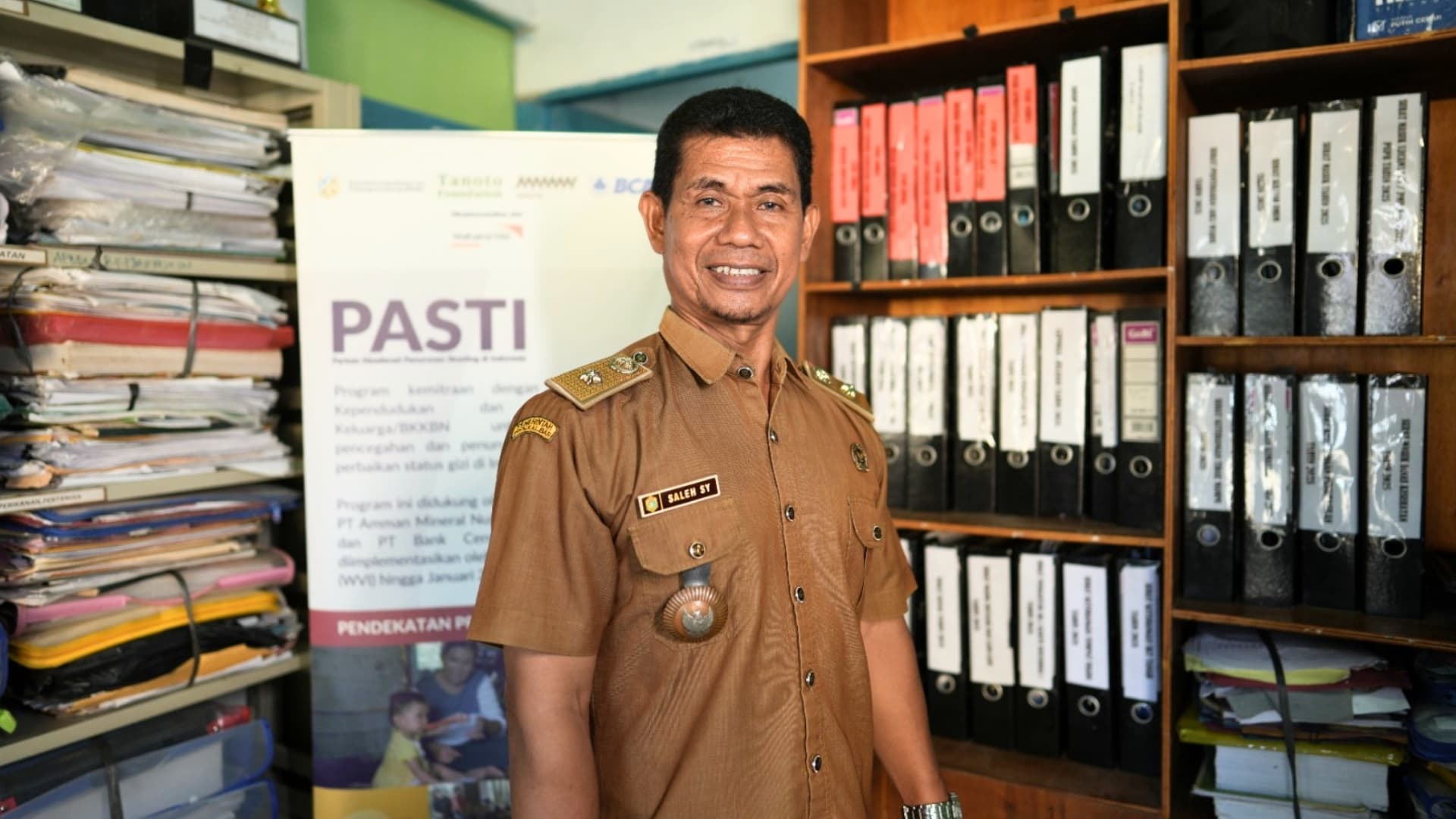
Facing Budget Efficiency with Concrete Action
Since 2025, the village led by Pak Saleh has successfully run the DASHAT Nutrition Post (PGD) program, funded 100% by the Village Fund. However, a real challenge emerged in 2026 when the village had to implement massive budget efficiencies. This situation immediately threatened the continuity of the PGD classes.
Refusing to give up on the circumstances, Pak Saleh immediately took tactical steps. He instructed the Human Development Cadres (KPM) to conduct re-data collection. The result showed that 17 children under two years old (baduta) still desperately needed PGD class interventions based on medical criteria.
Armed with this valid data, the sports-loving man quickly drafted a proposal. He stepped up to directly meet the leaders of companies operating around his village to apply for Corporate Social Responsibility (CSR) funding assistance.
"I went straight to the company leadership and explained that these children at risk of stunting need to be addressed immediately because it relates to their future development. This is very urgent to carry out in 3 hamlets. If we have good intentions for the community, someone will surely come to help," said Pak Saleh with full conviction.
His persuasive efforts bore sweet fruit. The company agreed to channel IDR 4,000,000 in funding. This fund was then combined with the remaining Village Fund allocation, which was also IDR 4,000,000. With a total fund of IDR 8,000,000, the village successfully ensured that the 17 children received adequate nutrition over 23 meetings.
Changing Behavior, Fostering Hope
For Pak Saleh, PGD is not just a free feeding program, but a crucial space for education and behavioral change. Amidst his busy schedule, he routinely visits to monitor the classes firsthand.
Building Children's Appetites: "I am very happy when I see the children eating together. Children who usually have trouble eating at home are willing to eat here because they see their friends," he shared.
Nutritional Education for Parents: Pak Saleh realizes the habit of mothers who often provide food "as long as it tastes good" without looking at its nutritional composition. The presence of volunteer educators in the PGD class is very helpful in providing a new understanding of how to prepare food properly.
Of course, this journey has its own challenges. Unpredictable weather makes children vulnerable to coughs and colds, and sometimes parents are absent due to transportation difficulties. Overcoming this, Pak Saleh continues to inject enthusiasm into the cadres on the ground.
"I told the cadres that this activity is not just about getting it done. Ask parents to practice the food menus they have learned at home so their children's weight can increase. Parents must also actively learn and embrace the education!" he asserted encouragingly.
Long-Term Commitment
The real impact of the PGD class consistency is strongly felt. Previously, there were more than 20 children who had to attend the recovery class; now, the number has decreased to 17 children thanks to nutritional improvements in the village.
At the end of his story, Pak Saleh expressed his appreciation for the mentoring that has been provided. "Thank you to Wahana Visi Indonesia and the PASTI Program for being willing to work with us in increasing the capacity of this PGD. We learned how to provide proper eating patterns to children and pregnant women. Moving forward, we are strongly committed to continuing to budget for PGD activities in the years to come."
This brilliant collaboration from Sekadau Regency serves as tangible proof: village fund efficiency is not an end, but a starting point for innovation and partnership for a brighter future for the children.
This story was from the PASTI Program (Partnership to Accelerate Stunting Reduction in Indonesia), a collaboration between the Ministry of Population and Family Development/National Population and Family Planning Board (BKKBN), Tanoto Foundation, PT Amman Mineral Nusa Tenggara (AMMAN), and PT Bank Central Asia Tbk, implemented by Wahana Visi Indonesia and the Cipta Foundation to improve the nutritional status of mothers and children until January 2027.