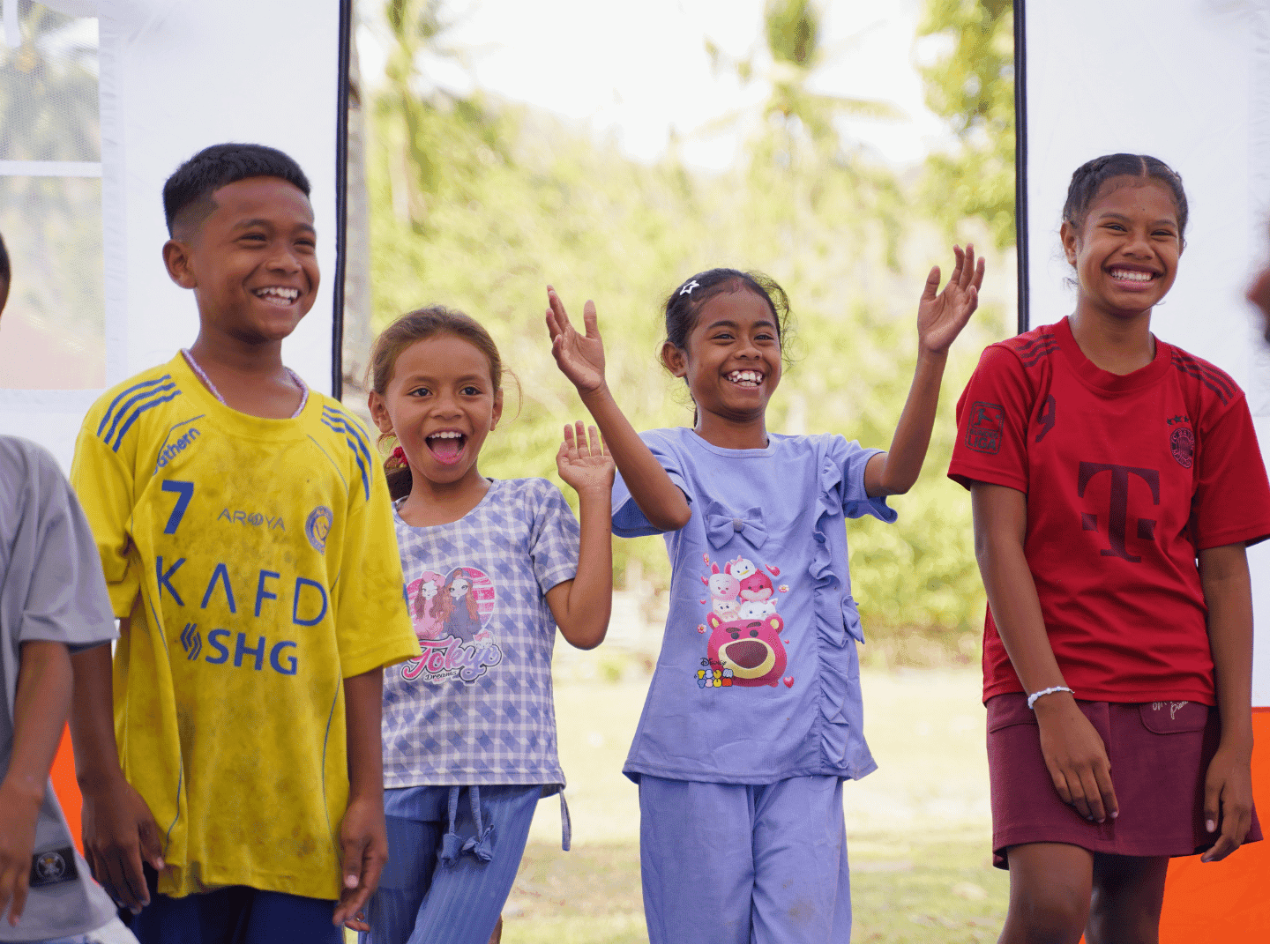
At present, one memory remains deeply etched in the minds of children across Flores, East Nusa Tenggara: the magnitude 7.7 earthquake that struck on 15 August 2026, destroying homes and schools. It was a disaster that changed their lives in a single morning.
"When the earthquake happened, I was asleep. I immediately ran to my father's bed, but parts of the house were already collapsing. I took shelter with my father," said Alno, a 13-year-old boy from Manggarai Regency. The earthquake reduced his home to rubble. Together with his parents and siblings, he now lives in an emergency shelter. His daily routine has come to a halt, replaced by a series of aftershocks. "I'm still traumatised," he said.
In Nagekeo Regency, nine-year-old Beti is also an earthquake survivor. Part of her home collapsed during the disaster. "When the earthquake happened, Mum took my younger sibling and me outside. Now I'm staying at my aunt's house and attending school at the evacuation site," she explained.
Thousands of children across Flores share experiences similar to those of Alno and Beti. The disaster has brought uncertainty and anxiety. The rhythm of daily life was suddenly disrupted. Children supported by Wahana Visi Indonesia (WVI) in the six regencies affected by the earthquake were already living in vulnerable circumstances. When the disaster struck, that vulnerability became even more severe.
Yet amid these challenges, children and families across Flores have shown extraordinary resilience. Parents have supported one another despite facing hardships themselves. Children remain their parents' highest priority. And through their innocence, children have shown that while the earthquake may have taken their homes and schools, it has not taken away their joy or their spirit.
WVI responded immediately by shifting its programmes from community development to emergency response. The gaps created by the earthquake needed to be addressed without delay, not only to ensure the safety of children and families, but also to preserve the dignity, hope, and determination they continue to demonstrate in the face of adversity.
As of 14 September 2026, WVI's emergency response had reached more than 21,000 people, including over 13,400 children. During the first month of the response, WVI carried out the following activities:
Non-food item distribution
Access to clean water and sanitation
Initial psychosocial support for children
Emergency nutrition kitchens for young children
The emergency response will continue until November 2026. Because we want to stand alongside Alno until he becomes a footballer, Beti until she becomes a teacher, and every child in Flores until each of their dreams becomes a reality.
Author: Mariana Kurniawati (Communication Executive)