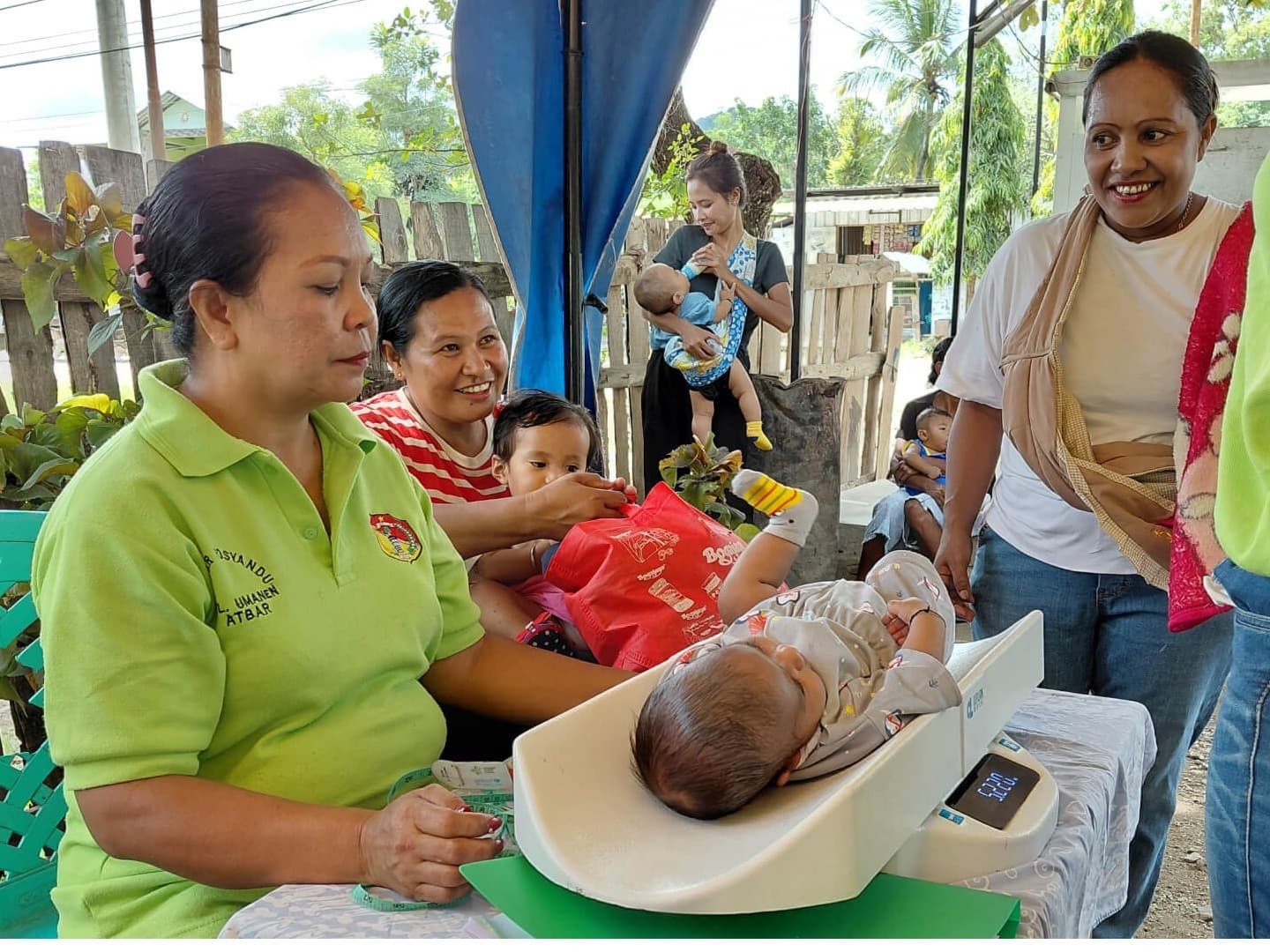
For the Posyandu cadres in Belu, providing child health services means more than simply waiting for families to show up. Sometimes, it means going from house to house, reaching out to parents, listening to their concerns, and making sure children receive the health services they need. Through these small but meaningful steps, change begins to take root.
Previously, the attendance rate of children and parents at the Posyandu remained at around 50%. One of the challenges was that children often became restless and bored while waiting for their turn. Long waiting times made the Posyandu experience less comfortable for both children and their parents.
Recognizing this challenge, an Individual Service Provider (ISP) from Wahana Visi Indonesia (WVI), who supports the Posyandu, worked collaboratively with local partners to introduce a dedicated children's play area. With simple activities such as drawing and coloring, the waiting area was transformed into a more welcoming and child-friendly space.
However, creating a comfortable environment alone was not enough. A collective effort was needed to help more parents understand the importance of bringing their children to Posyandu regularly.
Collaboration Opens the Door to Change
Despite attendance levels showing little improvement, WVI continued to strengthen its collaboration with local healthcare providers. Strategic meetings with the newly appointed Head of Umanen Community Health Center (Puskesmas) became an important step toward building a shared commitment. Findings from Posyandu monitoring activities were also presented during sub-district workshops and other coordination meetings.
These efforts received strong support from Dr. Yeni Tassa, Head of Umanen Community Health Center, who set a target of at least 90% attendance. This ambitious target motivated Posyandu cadres and healthcare workers to find more effective ways to reach families.
One approach they consistently implemented was sweeping, conducting home visits to families who had not brought their children to Posyandu.
For the cadres, these visits meant more than simply knocking on doors. They provided an opportunity to understand why parents were not attending, listen to the challenges they faced, and reinforce the importance of regularly monitoring their children's growth and development.
From House to House, Witnessing Change
Over the past three months, the benefits of these home visits have become increasingly apparent to the cadres working in the community. Mama Wandelina Seran, a Posyandu cadre in Belu, shared her experience of taking part in the initiative.
"These home visits are very helpful because we get to understand why parents and their children do not come to Posyandu. Even though we have to walk to each household on our list, what matters most is that the children still receive the services they need."
"After three months of regular visits, some parents who rarely attended have started bringing their children to Posyandu on their own. Although some families still stay home for various reasons, we cadres continue visiting and providing services as long as the children are within our reach. The Head of the Community Health Center's 90% attendance target has truly encouraged us to keep going," Mama Wandelina shared with a smile.
Mama Wandelina's experience shows that change does not always begin with grand gestures. Sometimes, it starts when someone is willing to make time to visit families, listen to their stories, and remain present, even when the journey is not always easy.
"For us, what matters most is not just seeing attendance numbers increase, but making sure children receive the services they need."
More Than Just Attendance Numbers
The dedication of cadres like Mama Wandelina has played an important role in the changes taking place at Posyandu. Consistent home visits, combined with education on the importance of bringing children to Posyandu every month, have contributed to an increase in the D/S ratio, surpassing the initial target of 90%.
The D/S ratio is an indicator that compares the number of children weighed at Posyandu with the total number of children under five registered in its service area. A figure above 90% indicates that a greater proportion of registered children are being reached through weighing activities, although this indicator should also be considered alongside other health service indicators.
This progress demonstrates that sweeping is about much more than increasing attendance figures. Home visits create opportunities to build relationships with families, understand the challenges they face, and nurture awareness so that parents are motivated to bring their children to Posyandu on their own initiative.
Behind every visit are the footsteps of dedicated cadres. Behind every child who finally comes to Posyandu is an effort to build trust and foster care. And behind the progress at Posyandu Belu is a collaborative effort among WVI, the Community Health Center, Posyandu cadres, and the wider community, all working toward a shared goal: ensuring every child has the opportunity to grow up healthy and thrive.
Written by: Wahana Visi Indonesia's Belu Operational Office Team, East Nusa Tenggara