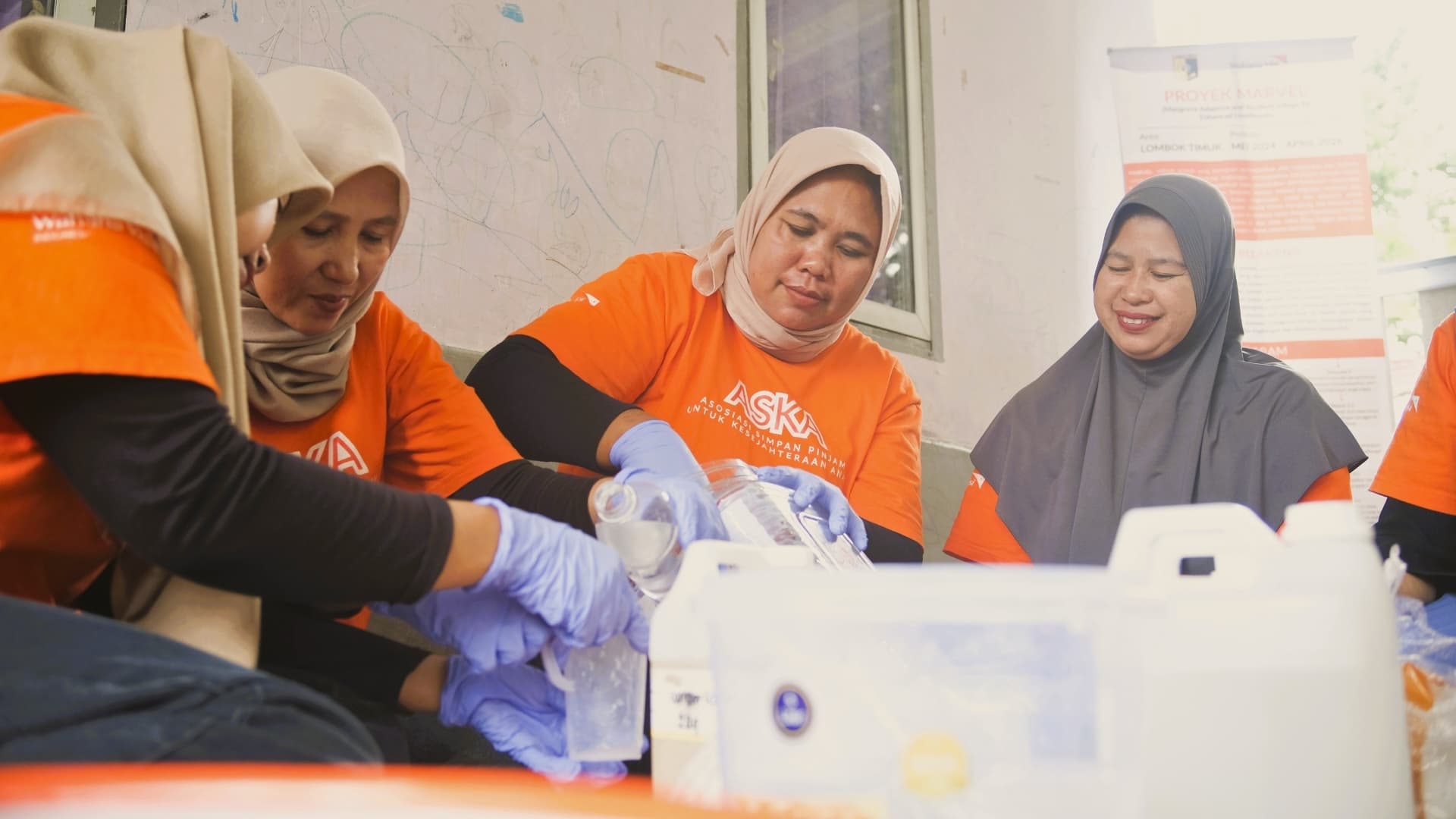
In Lombok, there is a popular term used by the locals: "bank rontok" (the crumbling bank) or "bank subuh" (the dawn bank). These two names refer to the same thing: money-lending practices that verge on predatory loan sharking. Often disguised as cooperatives, these lenders arrive at the crack of dawn (subuh) and knock on the doors of their debtors. Local governments in East Lombok, and even at the provincial level in West Nusa Tenggara (NTB), have long rejected these practices. Various programmes have been implemented, yet the phenomenon persists.
However, the experience in the eastern coastal areas of East Lombok—specifically in two villages supported by Wahana Visi Indonesia (WVI)—serves as an example of how women's groups can provide a way out of the "bank rontok" trap.
The atmosphere of Ramadan does not hinder the activities of several women in a village in East Lombok Regency. Sitting on the floor without mats, they carry small ledgers, savings envelopes, and share occasional bursts of laughter amidst their conversation. These meetings have become a routine twice-monthly event. In this simple setting, dozens of coastal women are slowly building their own economic strength.
They are members of an S4T group (Saving for Transformation), a community savings model implemented by WVI in the coastal villages of East Lombok. To some, it might look like a simple savings activity. But for the women here, S4T is a space for learning, mutual support, and a gateway to small businesses they never previously imagined—saving them from the clutches of loan sharks.
"Today, we happen to be distributing social aid and sharing our business profits," says Rosmawati, the head of S4T group called Pelangi.
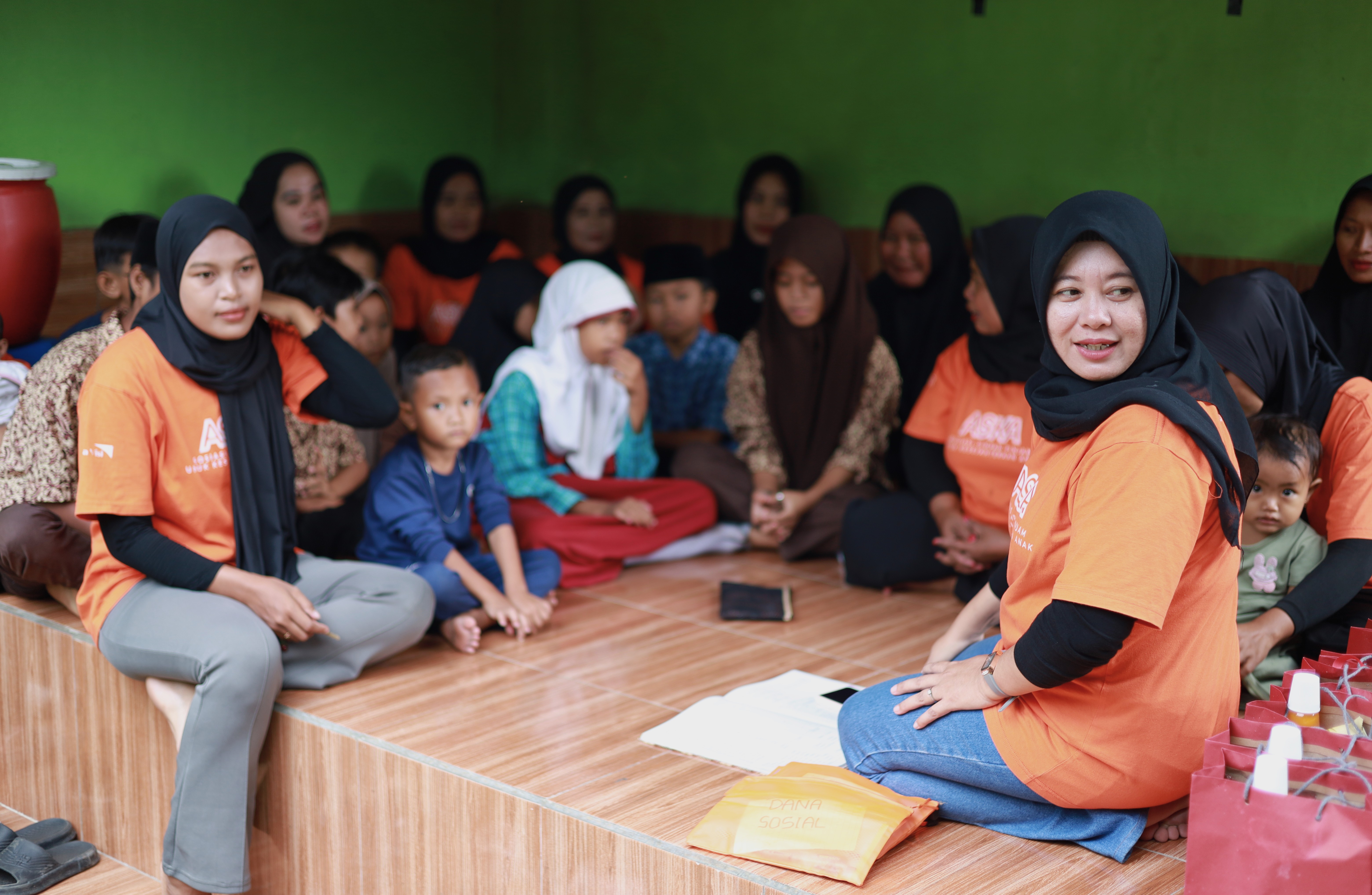
On that morning in the middle of the holy month of Ramadan, several children received gift packages and social aid from the group. This money comes from the profits generated by the group's collective business activities. These donations are carried out regularly alongside the distribution of the business profit for the 28 group members. In early 2026, the group’s total savings reached IDR 62 million.
Most members of this group are farm workers and small-scale traders. Every member holds equal status, rights, and obligations. They save money, and those savings are then circulated as business capital for members. The group gains additional capital from the interest on those loans. One reason members are happy to borrow and repay is that all profits are returned to them. Everyone receives a fair share based on the number of "shares" they own.
"I was able to increase my stock because of this group," says Dian, a member who sells various side dishes and snacks. During the fasting month, she added items to meet local demand, such as takjil (snacks for breaking the fast). All her capital came from the saving group.
Women and Coastal Economic Resilience
Coastal villages in Indonesia often face complex economic challenges. A heavy reliance on the fisheries sector means household income is highly dictated by the seasons and sea conditions. In such situations, small businesses run by women become a vital backbone for the family economy.
Furthermore, when they need emergency funds for healthcare or education, they can access them easily through the group. There are no rigid requirements like those of a formal bank, and no risk of losing assets, which often happens when borrowing from loan sharks. Through S4T, women in coastal villages not only save but also learn financial management, how to run a business, and how to build social networks.
"Before, we just used to hang out normally," says Mastah, the head of S4T group called Mumbul Bahari.
The Mumbul Bahari group consists of 22 women, most of whom come from fishing families. Their lives follow their husbands' work cycles: fifteen days at sea, three days home, and then back to sea. While their husbands were away, they used to gather to discuss viral social media trends and create content about their daily lives. That was until WVI arrived to provide mentoring and financial literacy.
The financial management is simple, similar to a traditional arisan (rotating savings circle). However, this money is not simply spent once distributed. Members deposit savings regularly, and the amount deposited is counted as shares. The collected funds can then be borrowed by members in need. Interest rates are low and determined by mutual agreement. For many coastal families who have traditionally found it difficult to access formal financial institutions, this mechanism is a vital solution.
"If a child is sick or there’s an urgent need, we can borrow directly from this saving group," Mastah explains. "The interest is small, around two per cent, and even that is eventually shared back among the group."
Trust between members is the key to success. There is no collateral and no complicated administration. Everything runs on agreement and shared responsibility. Because of this, when providing assistance, WVI targets women who are already part of informal social groups. "Now, many people from outside want to join after seeing the benefits," she says.
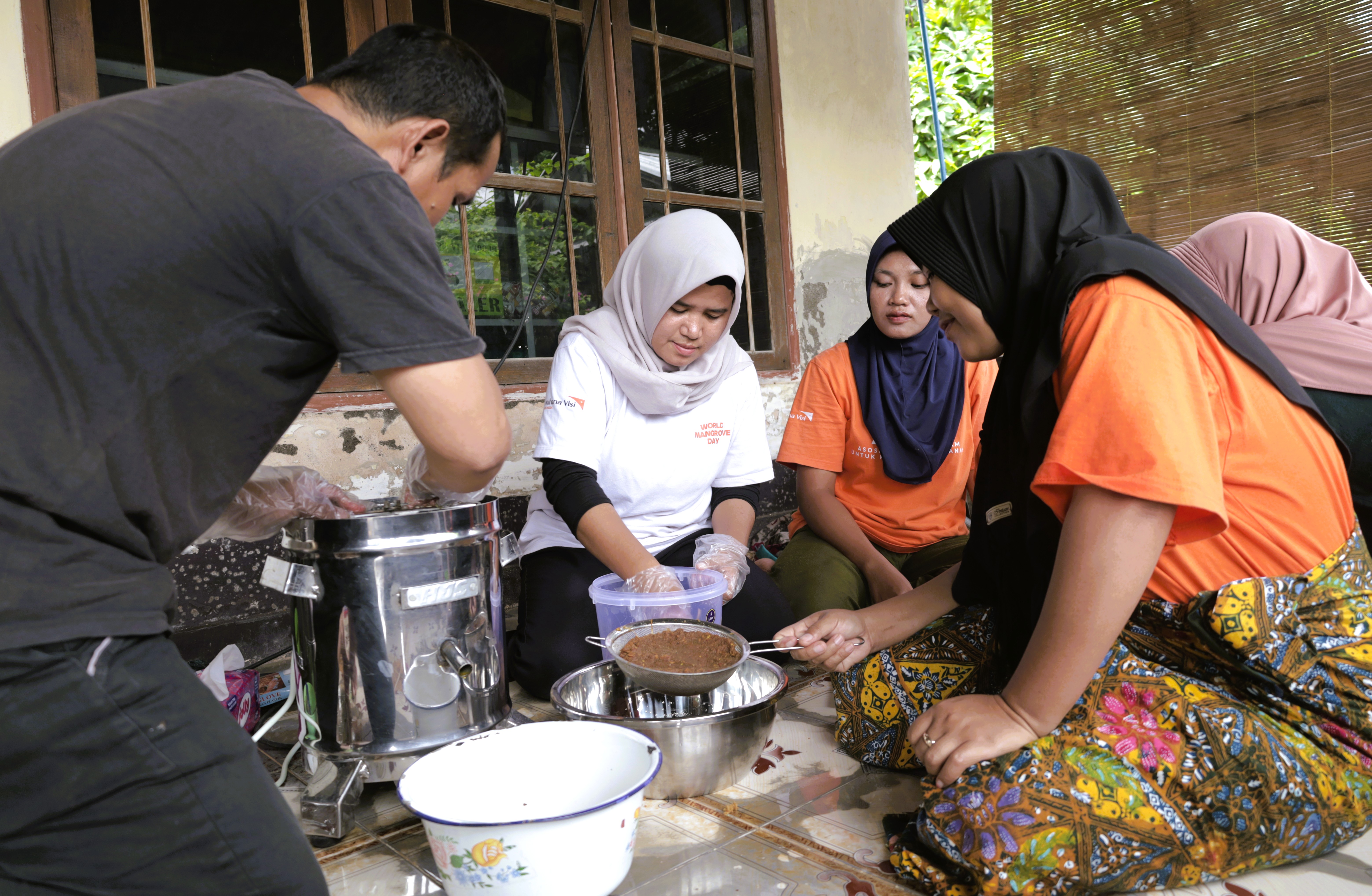
A similar story comes from Maesum, the head of the UMA business group. She recalls her life before attending the training sessions facilitated by WVI. "We were just fishermen's wives," she says. "Now, we can earn money and help the family economy."
Her group now produces various processed fish products, such as skipjack tuna floss, mackerel tuna floss, and yellowfin tuna floss. These products are sold around the village and in local markets. Currently, the group is perfecting the recipes for their floss business. They have also started marketing through their social circles. Additionally, they can consume the homemade fish floss themselves, contributing to their children's nutrition.
Turning Mangroves into Value-Added Products
These two WVI-assisted villages in East Lombok are located in coastal areas that still possess extensive mangrove forests. For years, mangroves were seen as a common landscape—merely a place for fishermen to find fish or crabs. The S4T groups saw an opportunity there. In addition to savings and loans, they have begun processing mangrove products.
In the S4T called Gemilang group, for instance, members have developed various products derived from mangroves, including jeruju (holly-leaved acanthus) crackers, mangrove tea, and even dish soap made from the fruit of the Sonneratia alba mangrove species.
"Besides savings and loan activities, we also make several mangrove derivative products," says Raudatul Jannah, head of Gemilang saving group.
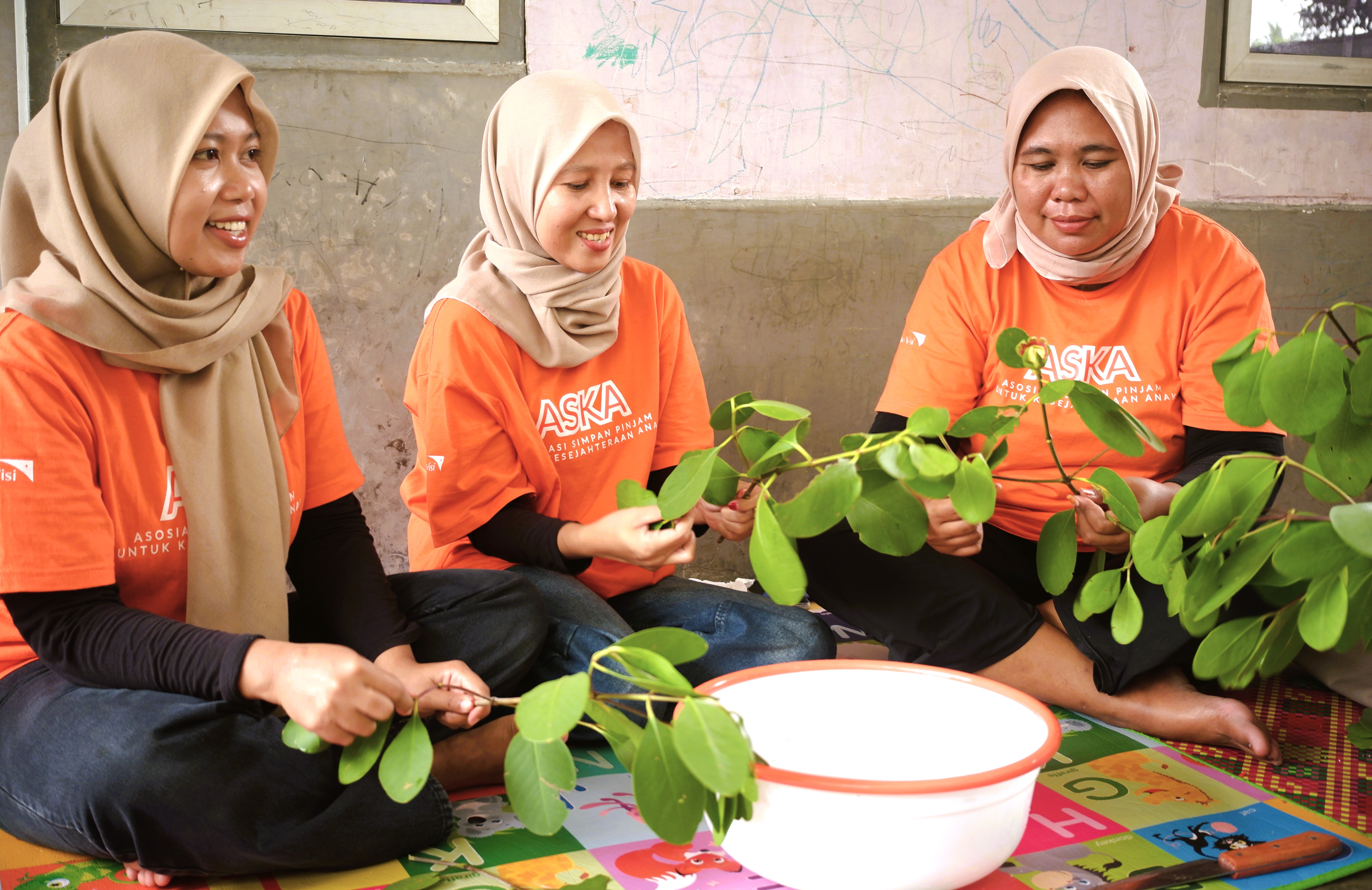
Initially, this group had only 15 members. After the community saw their activities, the number grew to 23 in the second cycle. The increase in membership signals one thing: more village women want to be involved in collective economic activities. "When people saw what we were doing, many became interested and finally joined," says Raudatul.
Beyond providing extra income, these mangrove-based businesses are slowly fostering an awareness of the importance of protecting the coastal ecosystem. Mangroves are no longer just forests by the sea; they are a source of life that must be preserved to remain sustainable. When mangroves are utilised responsibly, these women can generate additional support for their families.
The Mangrove Adaptive and Resilient Village for Enhanced Livelihoods (MARVEL) programme aims to increase community and individual action to restore and protect the environment, improve the food security of households and children, and strengthen community livelihoods and resilience against climate-related and other disasters. This is achieved through mangrove restoration and protection activities, as well as environmental, social, and economic assessments designed to create a sustainable environment. The programme is implemented in collaboration with the East Lombok Regency Government, focusing on two villages over a two-year period from May 2024 to April 2026.
Author: Fathul Rakhman (Writer consultant for MARVEL programme in Lombok)
Editor: Maria Pratiwi (MARVEL Lombok Project Coordiantor), Mariana Kurniawati (Communication Executive)