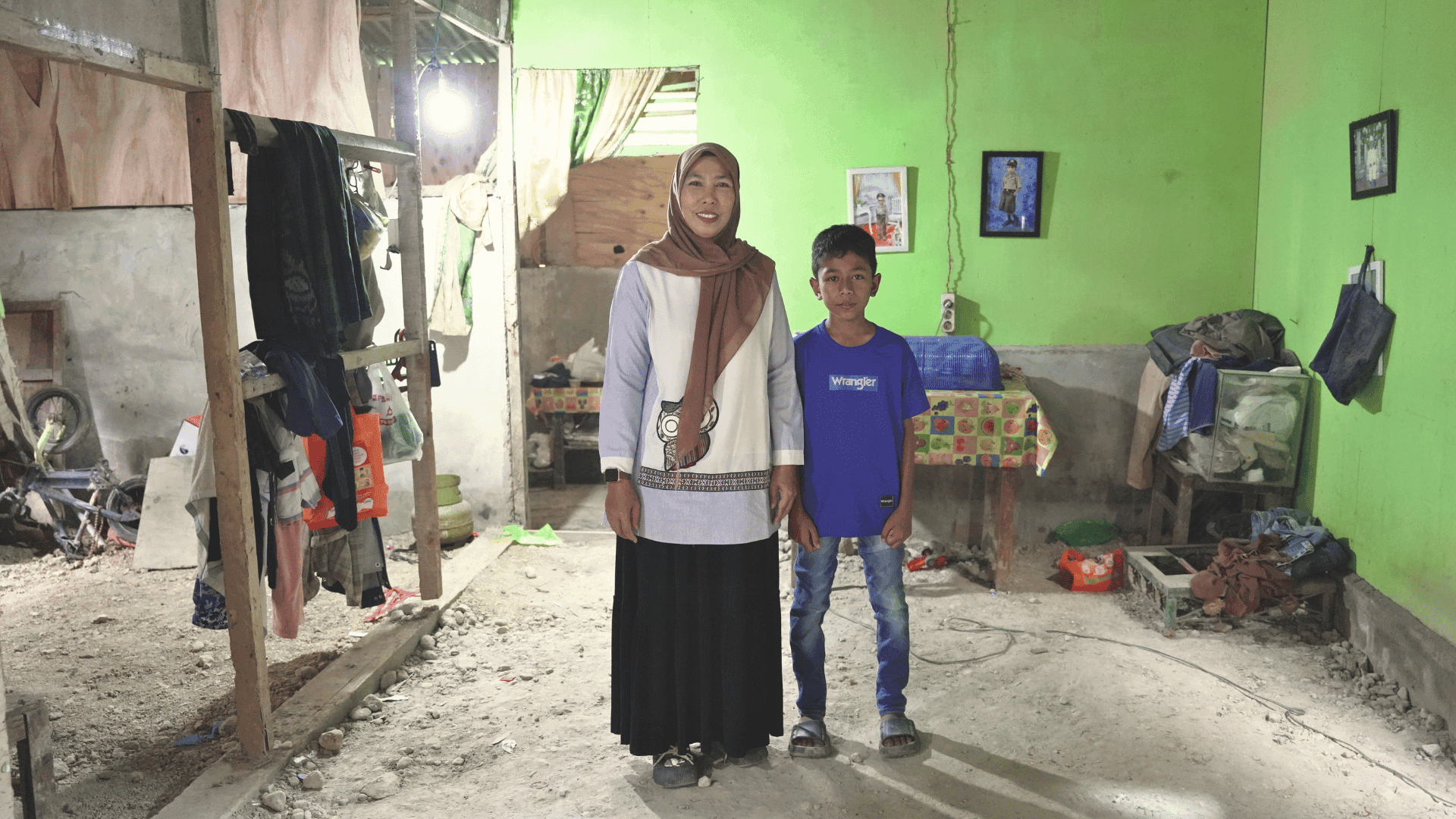
Six months after the floods and landslides, Kak Bit (45) still vividly remembers what happened to her family and her village in late November 2025. It was the day she had to save her children from being swept away by floodwaters, while also remaining mindful of her responsibilities to her community in Pidie Jaya Regency, Aceh.
“We had never experienced flooding before, so we stayed calm at home even though the rain was heavy. At two o’clock in the morning, the water suddenly kept rising. It came through the wall that had been cut through. We didn’t have time to save any of our household belongings. Everything was submerged,” she recalled.
That night, Kak Bit, her husband, and their two children remained inside their home because conditions made evacuation impossible. She stacked together the items that had not yet been swept away—chairs, tables, and mattresses—to create a safe place for her children. Meanwhile, she and her husband stood in the floodwater throughout the night, waiting for daylight.
Before the disaster struck, Kak Bit served as a Posyandu (community health post) volunteer in her village. After the disaster, she remained committed to her role despite the uncertainty surrounding her own circumstances. Her family was displaced, her house was damaged, and the only belongings she had left were the wet clothes she was wearing. Yet none of this diminished her sense of duty.
“It came from my heart. If I didn’t help, what would happen to the children? As a volunteer, I have a responsibility to my village. After the flood, for about a week, the children lacked proper food. They were eating only instant noodles—whatever food was available. It was not enough to meet their nutritional needs,” she said.
Kak Bit’s concern for the village’s children was supported by several humanitarian organisations, including Wahana Visi Indonesia (WVI). A special kitchen for vulnerable groups was established at the evacuation centre. Every day, for approximately one month, Kak Bit and fellow volunteers prepared and distributed nutritious meals for young children, pregnant women, breastfeeding mothers, and elderly people. The Posyandu volunteers also received support from local residents, with everyone contributing according to their abilities.
“At that time, people were very happy to receive meals from the special kitchen because they genuinely needed them. Our village had not yet recovered. Residents were still living in temporary shelters, so food intake was limited, especially for children,” explained the woman, who works as a seamstress in her daily life.
This initiative had a positive impact on 614 children and 2,928 adults supported by WVI during its emergency response to the floods and landslides in two districts of Aceh. In addition to promoting nutrition and children’s health, the special kitchen for vulnerable groups helped empower local community members. Kak Bit was one such example—a Posyandu volunteer who selflessly and swiftly ensured that nutritious meals reached those most at risk during the emergency.
The challenging task became easier for Kak Bit because she received unwavering support from her husband. Her decision to prioritise the children in her village also became a source of hope, helping her find the strength to begin rebuilding her life from scratch.
“My hope for the children in this village is that they remain strong and keep moving forward, even though our village has not yet fully recovered. They must continue to look after their health, despite the many hardships and shortages we still face,” she concluded.
Author: Mariana Kurniawati (Communication Executive)