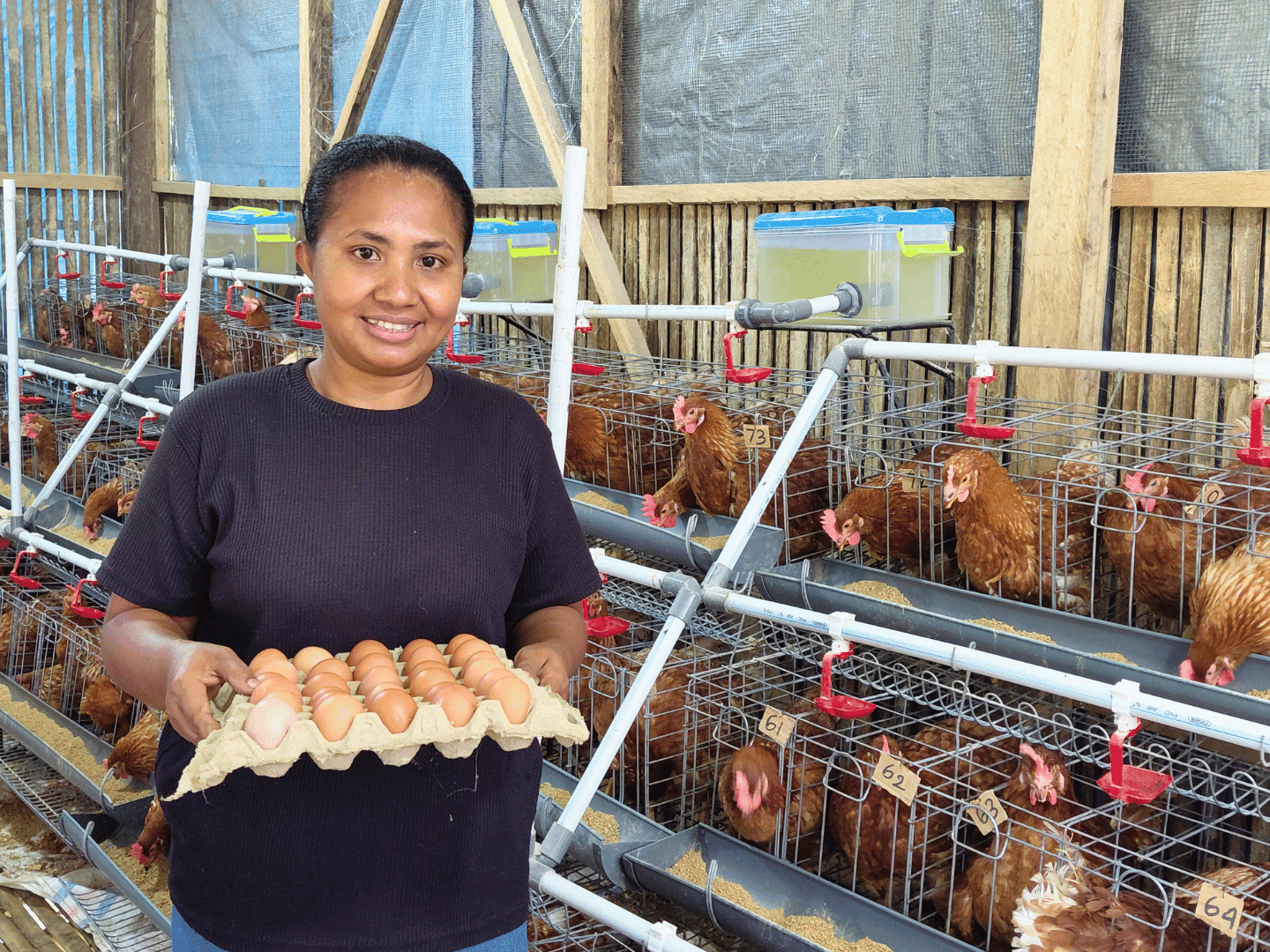
Before the village established its laying hen farming programme, residents had to travel to the market to buy eggs. The considerable distance to the market, along with transport costs, often made it difficult for families to obtain eggs regularly. Yet eggs are one of the most nutritious and easily prepared food sources for children.
Today, that situation has begun to change. Through support provided by Wahana Visi Indonesia (WVI)'s operational office in Ende Regency, the village has successfully established a laying hen farm. The farm is managed by S4T (Saving for Transformations), an existing community group in the village. Eggs are no longer a scarce commodity. The presence of the laying hen farm has made it much easier for residents to obtain eggs without having to travel to the market.
“As members of the S4T group, we receive a free allocation of eggs every month. Children who attend posyandu activities also receive one boiled egg each month as part of a Supplementary Feeding Programme (PMT),” said Fransiska, a mother who helps manage the laying hen farm.
The laying hen farm has not only made it easier for families to meet their household food needs, but it has also greatly assisted parents in providing animal protein to support their children’s growth and development.
“We are very happy and grateful because our children can now eat eggs every day. We are able to meet their animal protein needs on a daily basis,” Fransiska added.
In addition to benefiting families, the laying hen farming enterprise has created opportunities for the group to increase its income. Surplus eggs are sold to residents both within and outside the village. The proceeds from these sales are then saved and used to support the development and long-term sustainability of the laying hen farm.
“Other residents can buy eggs at a more affordable price, while we are able to save the income from egg sales, which will be used to sustain and expand this laying hen farming business,” Fransiska concluded gratefully.
This change demonstrates that laying hen farming not only supports the fulfilment of children’s nutritional needs, but also improves communities’ access to nutritious food and strengthens household economic resilience. Today, eggs are more affordable and accessible for families in one of the villages of Ende Regency.
The laying hen farming programme implemented in a WVI-assisted village in Ende Regency was made possible through the support of donors and sponsors who contributed to the ENOUGH campaign conducted between January and April 2025.
Author: Benedikta Da Silva (Team member in Central Flores Cluster area development programme)
Editor: Mariana Kurniawati (Communication Executive)