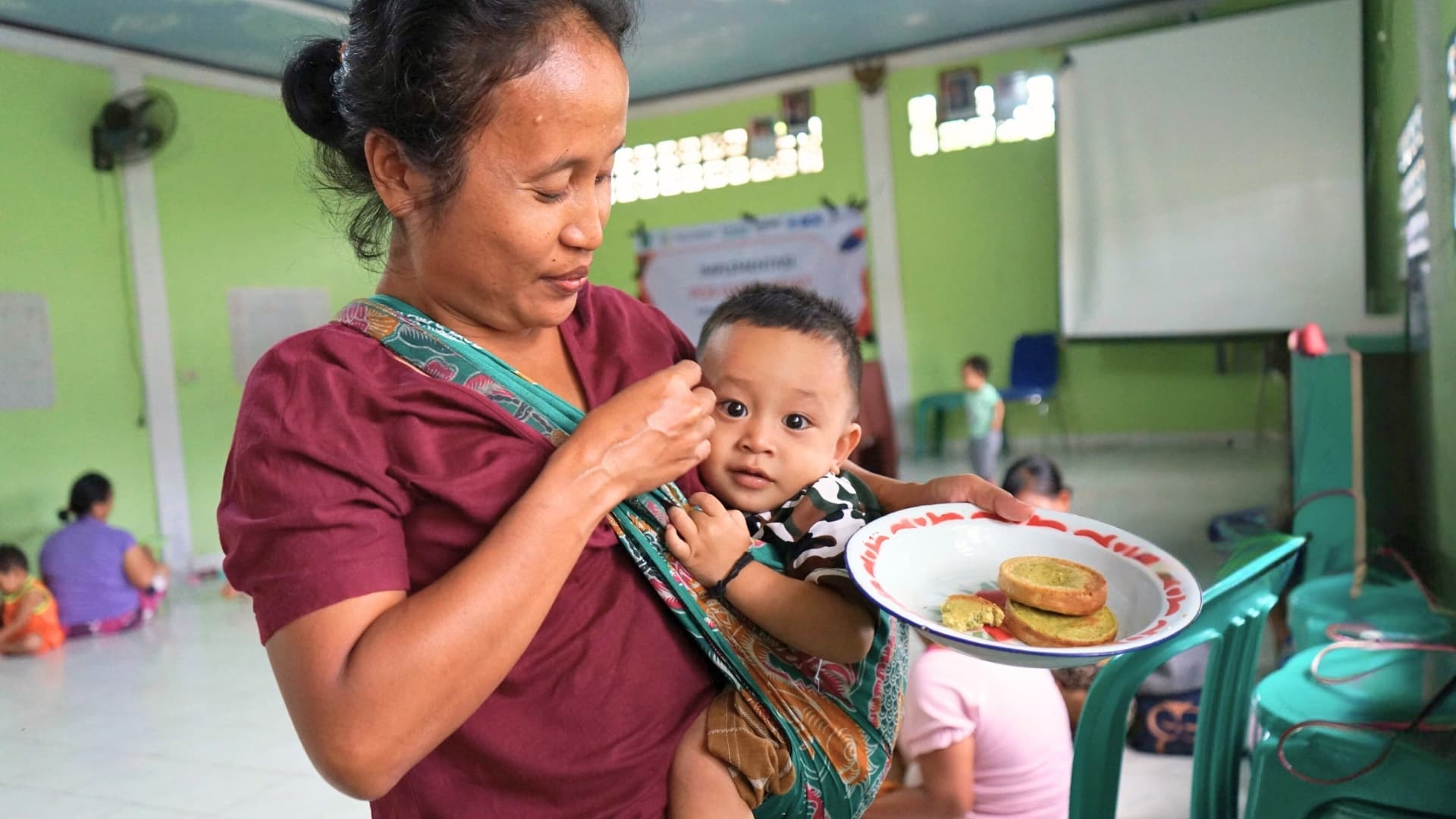
The implementation of Pos Gizi and DASHAT (PGD) classes in several villages across Bengkayang District throughout August has shown positive impacts in preventing stunting and improving the nutritional status of children and pregnant women. These activities have successfully raised awareness and promoted better nutrition practices within the community.
Notably, the PGD classes are now driven by genuine initiatives and support from village governments and local residents. A great example of this strong local commitment comes from a village in Bengkayang District.
Since July, 17 children in this village have participated in PGD activities, with 11 actively attending the feeding sessions. As a result, 6 children experienced a weight gain of at least 200 grams. Meanwhile, among 4 pregnant women identified with Chronic Energy Deficiency (CED), 2 attended the program regularly and completely, and 3 showed an increase in weight. These outcomes reflect the positive impact of nutritional interventions on both children and pregnant women.
In this village, all meal costs during PGD classes are fully covered by the village government. The village head even contributed personally to ensure the smooth running of the activities. The village also actively facilitates residents’ needs during the program, providing venues, logistics, and other technical support.
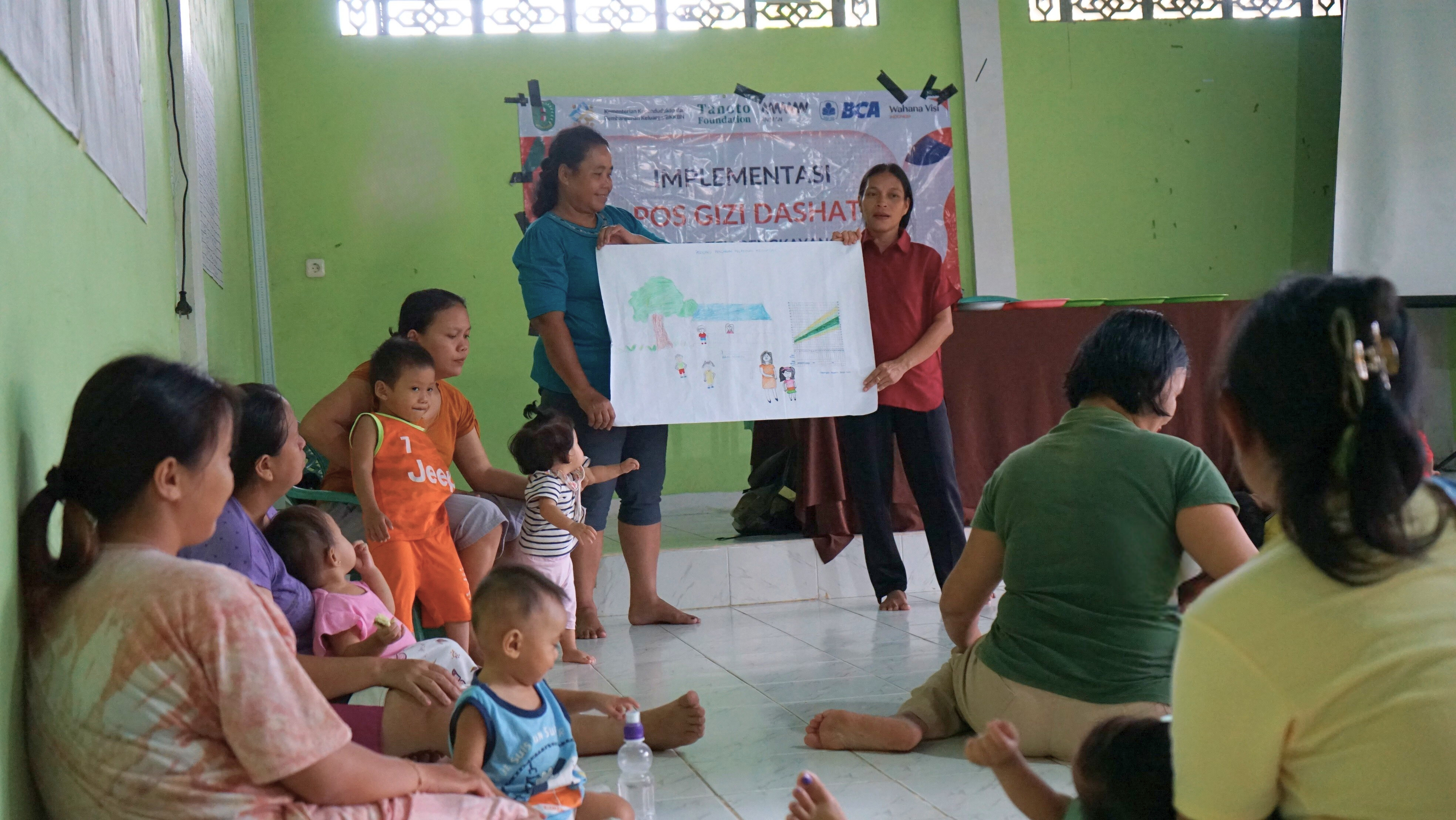
Moreover, the village government shows its support in various ways, including allocating funds for volunteer transportation, supplying food ingredients and kitchen necessities, and assisting with operational costs. This involvement proves that the village is not only an implementer but also a key driver of change at the local level.
Although challenges remain, such as parents’ habits not fully supporting their children’s attendance at feeding classes and limited access to clean water in some areas, the village’s enthusiasm for improving nutrition remains high.
Juriah, Chairperson of the local Family Welfare Movement (TP PKK), shared, “PGD has become our responsibility. We will continue monitoring to ensure children receive adequate nutrition.” The Village Head of Pasti Jaya also emphasized, “We are serious about tackling stunting. This program is very helpful, and we want to keep supporting its implementation as best as we can.”
The PGD activities are part of the PASTI Program (Partnership to Accelerate Stunting Reduction in Indonesia), a collaboration between the Ministry of Population and Family Planning (BKKBN), Tanoto Foundation, PT Amman Mineral Nusa Tenggara (AMMAN), and PT Bank Central Asia Tbk, implemented by Wahana Visi Indonesia through January 2027. The program aims to accelerate the reduction of stunting and improve child nutrition in Indonesia.
Through collaboration between village governments, communities, and program partners, stunting prevention efforts in Bengkayang District continue to show positive progress and deliver meaningful impact in accelerating stunting reduction.
Author: Mariana, Lea Sabrina (PASTI programme team member)