
Becoming a child sponsor means making a commitment through a Child Sponsorship Programme that is carefully planned and managed. Through the programme, sponsors make regular contributions that support a range of activities for children and the environments in which they grow and develop. Before joining, it is important to understand how the programme works, the commitment involved, the information sponsors will receive, and the boundaries of the relationship between sponsors and children, so that expectations are clear from the outset.
We manage the sponsorship programme through a long-term approach that involves children, families, schools and communities. Sponsors’ contributions support programme implementation in the communities where we work, rather than being given directly to an individual child.
Throughout the programme, sponsors are expected to fulfil their commitments in accordance with the applicable terms and conditions, receive updates on programme progress, and contact our support team if they require further information. Understanding these aspects can help prospective sponsors assess their readiness before making a decision.
What Does It Mean to Become a Child Sponsor?
A child sponsorship programme is a form of ongoing support that helps deliver a range of activities for children through programmes managed by the organisation. This approach aims to address children’s needs by involving the environments in which they grow, allowing the benefits of the programme to reach more people.
As programmes are implemented within specific communities, activities are adapted to local needs. This means that support is not focused on just one area, but also considers the various factors that influence children’s growth and development.
Sponsors Support a Planned Programme
One of the most important things to understand is that sponsors’ contributions are used to support the implementation of programmes planned according to the needs of the communities where we work. These programmes may cover areas such as education, health, child protection and family strengthening, based on the needs identified within the community.
This approach enables activities to be implemented in a structured and sustainable way. Therefore, sponsors’ contributions are not given directly to children in the form of money, but are used to support various activities that form part of the programme.
Support Reaches Children and Their Communities
Children’s growth and development are influenced by the environment around them. For this reason, the programme involves not only children, but also families, schools and communities, all of which play an important role in children’s everyday lives.
Families help build positive habits at home, schools support the learning process, while communities help create safe and supportive environments for children’s development. Activities may vary from one community to another, as they are adapted to local needs and circumstances.
A Sponsor’s Responsibilities During the Programme
Understanding a sponsor’s responsibilities helps prospective sponsors know what their commitment involves throughout the programme. Some responsibilities are essential requirements, while others are activities that help sponsors stay informed about the progress of the programme.
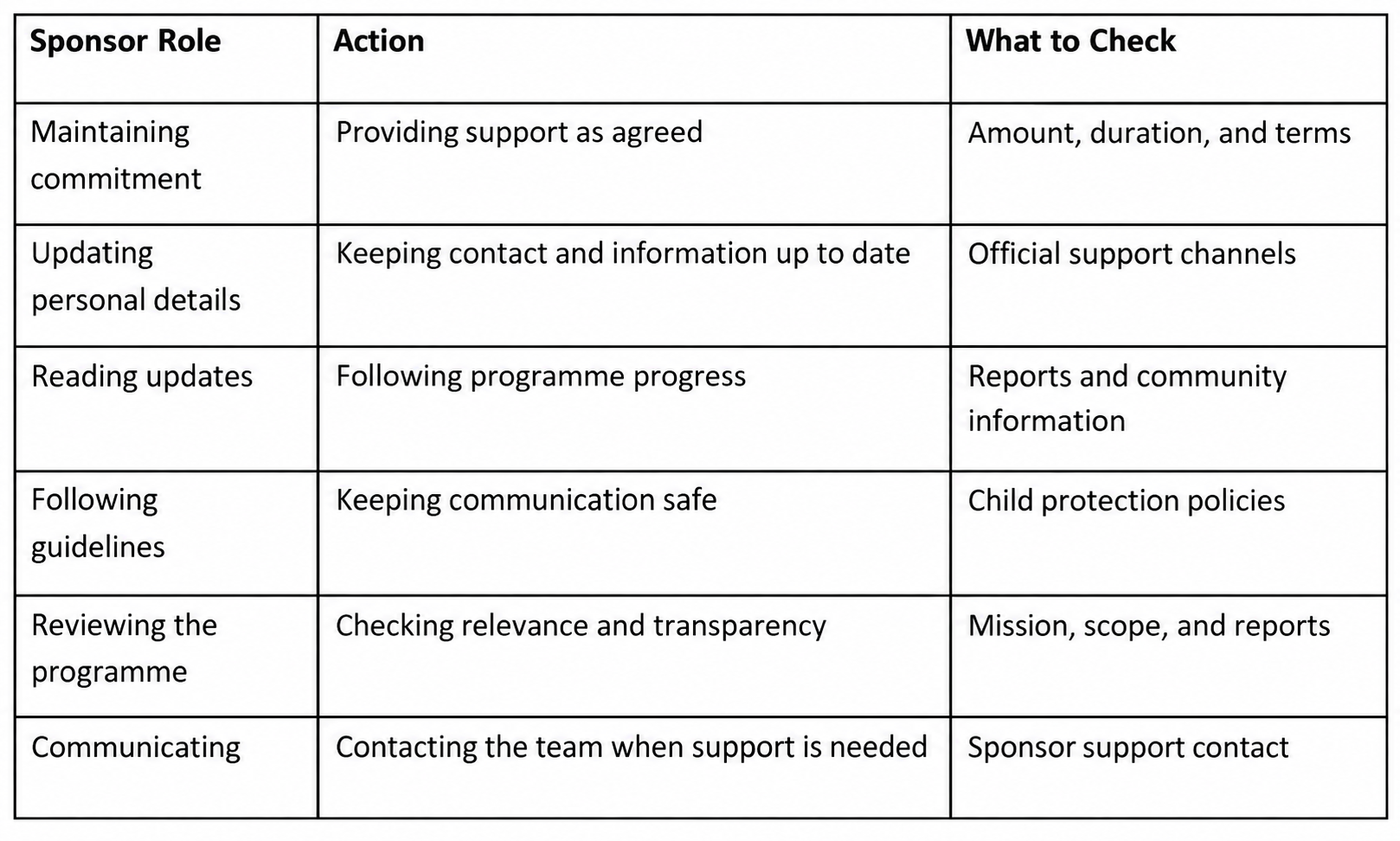
Maintaining Your Commitment in Line with the Programme Agreement
Commitment is an important part of the sponsorship programme. Before joining, we encourage prospective sponsors to understand the type of support, programme duration and applicable terms and conditions, so that they can fulfil their commitment comfortably.
Choosing a contribution that is appropriate for your personal circumstances is also important. By realistically considering your financial capacity from the outset, you can provide more consistent support without taking on a commitment beyond your means.
Keeping Your Personal and Payment Information Up to Date
Throughout the programme, sponsors should ensure that their contact details remain active so that they can receive programme updates and important information. If there are changes to your email address, telephone number or other circumstances that may affect communication, please contact the sponsor support team through the official channels as soon as possible.
Similarly, if there are any changes relating to your regular contribution, communicating through the official channels helps ensure that the process continues in accordance with the programme’s terms and conditions. This helps maintain clear communication between sponsors and the programme team.
Reading Programme Updates and Reports
One of a sponsor’s responsibilities is to stay informed about the information shared throughout the programme. Updates and reports help sponsors understand the progress of activities in the communities where we work and see how the programme is implemented over time.
We provide information through official channels in accordance with the programme’s arrangements. By reading these updates, sponsors can understand programme achievements, ongoing changes and the context of the communities where we work, without assessing progress solely through the experience of one child.
Following the Communication Guidelines for Children
The Child Sponsorship Programme has communication guidelines designed to protect the safety and wellbeing of everyone involved, particularly children. Therefore, all forms of communication must follow applicable child protection policies.
If sponsors wish to send letters or other forms of communication facilitated through the programme, we encourage them to follow the official procedures. This helps protect children’s and sponsors’ personal information while ensuring that interactions remain safe and aligned with the purpose of the programme.
What Sponsors Receive During the Programme
In addition to fulfilling their commitments, sponsors receive various forms of information to help them understand the programme journey. This information forms part of our efforts to maintain communication and transparency throughout the sponsorship.
An Introductory Pack and Information About the Community
At the beginning of their participation, sponsors receive information to help them understand the programme. This may include the sponsored child’s profile, in accordance with applicable policies, sponsorship guidance and information about the community where the programme is implemented.
This information provides an overview of the environment in which the child grows and develops, helping sponsors understand that the needs of each community may be different. Understanding this context helps establish appropriate expectations about how the programme is implemented.
Programme Journey Updates
Throughout the programme, sponsors also receive official updates about programme progress in accordance with the applicable mechanisms. These may include news from the communities where we work, activity reports and other relevant updates.
For sponsors, these updates provide an opportunity to follow the programme journey and understand how their contributions support programme activities. They also reflect our commitment to transparency, without promising a specific outcome for an individual child.
Expectations to Clarify from the Beginning
Understanding how the Child Sponsorship Programme works helps prospective sponsors establish realistic expectations from the outset. Some common assumptions may need to be clarified to ensure a clearer sponsorship experience.
Sponsors Do Not Become Direct Caregivers
Becoming a sponsor does not mean taking on the role of a child’s direct caregiver. Support for children continues to be provided by the organisation together with families, schools and communities through activities designed according to local needs.
The relationship between sponsors and children also follows child protection policies. These guidelines are designed to protect children’s safety, privacy and best interests, while creating safe interactions for everyone involved.
Contributions Support Gradual, Long-Term Change
Change in the lives of children and communities takes place over time. Therefore, sponsors’ contributions support the implementation of long-term programmes that are regularly monitored and evaluated.
We encourage sponsors to understand progress through programme reports and official updates, rather than expecting a particular result within a short period. This approach provides a more complete picture of the programme journey in the communities where we work.
Check Your Readiness Before Becoming a Child Sponsor
Before joining, you can use the following checklist to assess your readiness to become a sponsor.
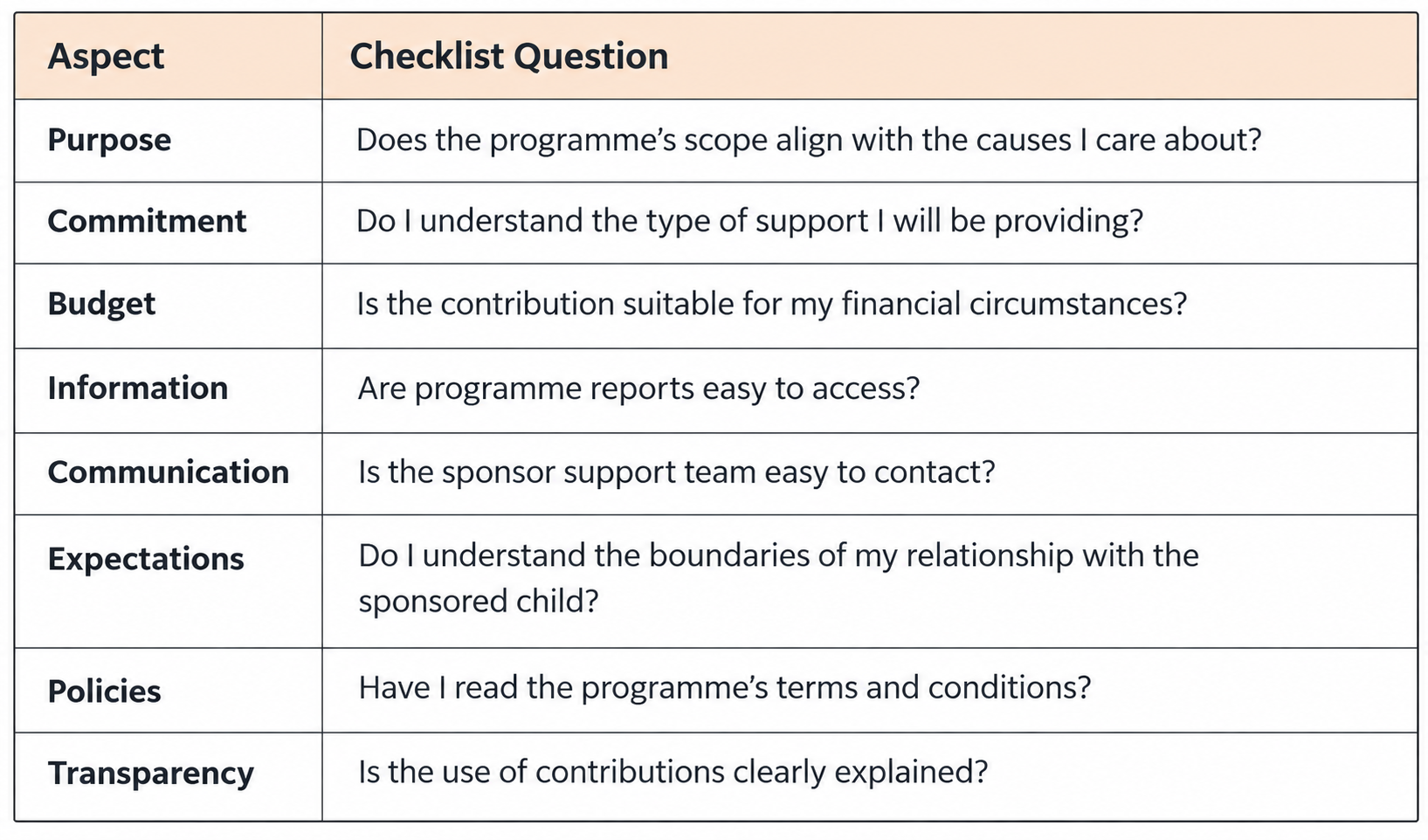
The checklist provides a simple way to review the information available and ensure that your decision to become a sponsor is aligned with your personal circumstances and readiness.
Learn More About Wahana Visi’s Child Sponsorship Programme
You now understand a sponsor’s responsibilities, the commitment involved, the information you will receive throughout the programme, and the importance of establishing clear expectations from the beginning. This information can help you consider whether sponsorship is aligned with your goals and readiness.
Learn about the sponsored child profile and the stages of Wahana Visi’s Child Sponsorship Programme before deciding how you would like to support a child. Find out more through the Child Sponsorship Programme page.