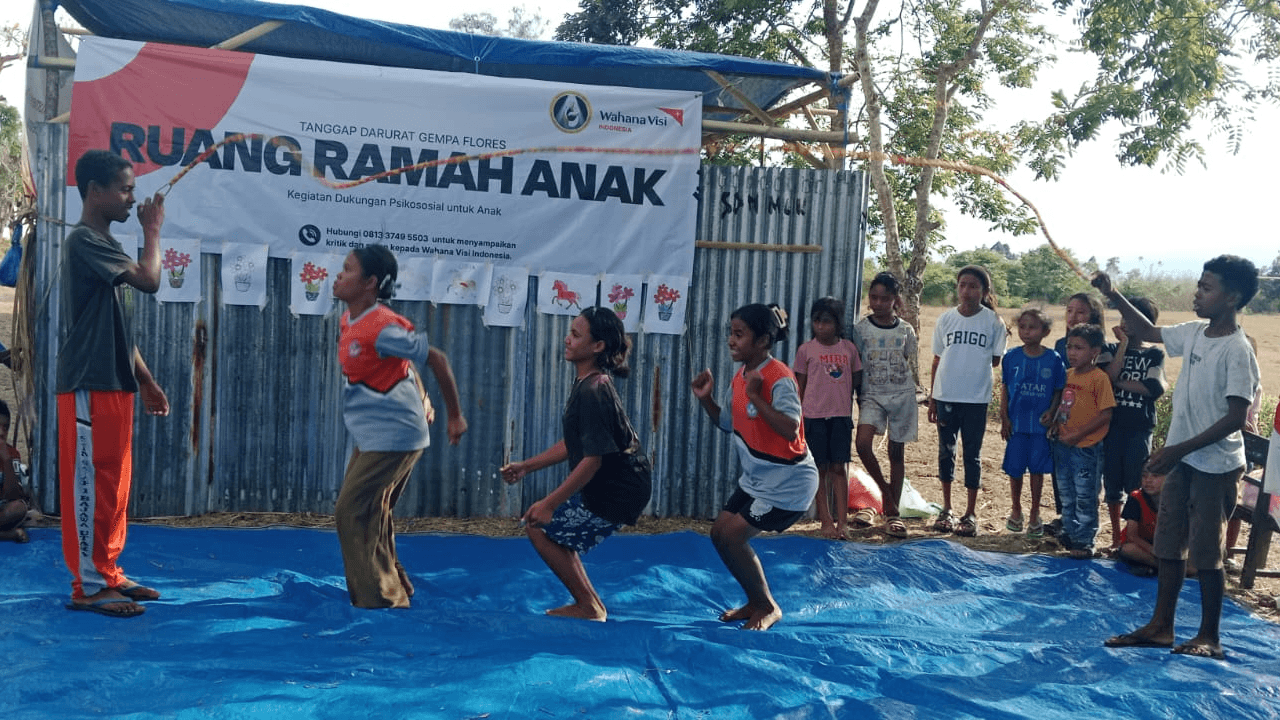
Ensuring Children Continue to Receive Support
Disasters can affect various aspects of children's lives, including their health, education, protection, and psychosocial well-being. For this reason, WVI's response focuses not only on distributing emergency assistance but also on providing support to help children and families cope with the impacts of the disaster.
One of the initiatives is to integrate psychosocial support activities into teaching and learning activities at schools that have begun operating again. WVI is also planning to provide learning spaces for students and teachers to help ensure that educational activities can continue in line with conditions on the ground.
In addition, the establishment of Child-Friendly Spaces is part of the response plan, providing safe places where children can play, interact, and participate in supportive activities.
This approach is in line with WVI's emergency response priorities, which aim to ensure that children's needs remain at the centre of disaster response efforts.
Assessments to Identify Recovery Needs
As the response progresses, WVI is continuing its assessment process to gain a more comprehensive understanding of the needs of affected communities.
The Joint Needs Assessment (JNA) has been completed, followed by the Joint Market Assessment (JMA). These assessments form part of the efforts to identify community needs and understand local market conditions, helping inform the planning of appropriate assistance.
WVI is also coordinating with local stakeholders to review initial recovery plans in the affected areas. This coordination is essential to ensure that the support provided reflects the circumstances and needs of communities, while encouraging the involvement of various stakeholders in the recovery process.
Continuing the Response Towards Early Recovery
As the situation on the ground evolves, WVI will continue its ongoing programme activities, adapting them to the needs of children and families.
Planned activities include the distribution of food assistance, the integration of psychosocial support into teaching and learning activities at schools that have resumed operations, and the provision of learning spaces for students and teachers.
These efforts are part of WVI's commitment to helping children and families meet their basic needs while supporting the continuation of their daily activities following the disaster.
Post-disaster recovery is a gradual process. Therefore, coordination, assessments, and programme adjustments will remain important to ensure that the support provided continues to respond to the needs of affected communities.
Together, Supporting Children and Families in Flores
The transition from emergency response to early recovery requires the support and collaboration of various stakeholders. For affected children and families, appropriate assistance can help them meet their basic needs, access protection services, and begin rebuilding their daily lives.
Wahana Visi Indonesia continues to support children and families in Flores through a response that places their needs at the centre of its efforts.
Your support can contribute to helping children and families affected by the Flores earthquake recover and move forward with their lives.
Let us work together to support the recovery of children and families in Flores. Donate now through Wahana Visi Indonesia