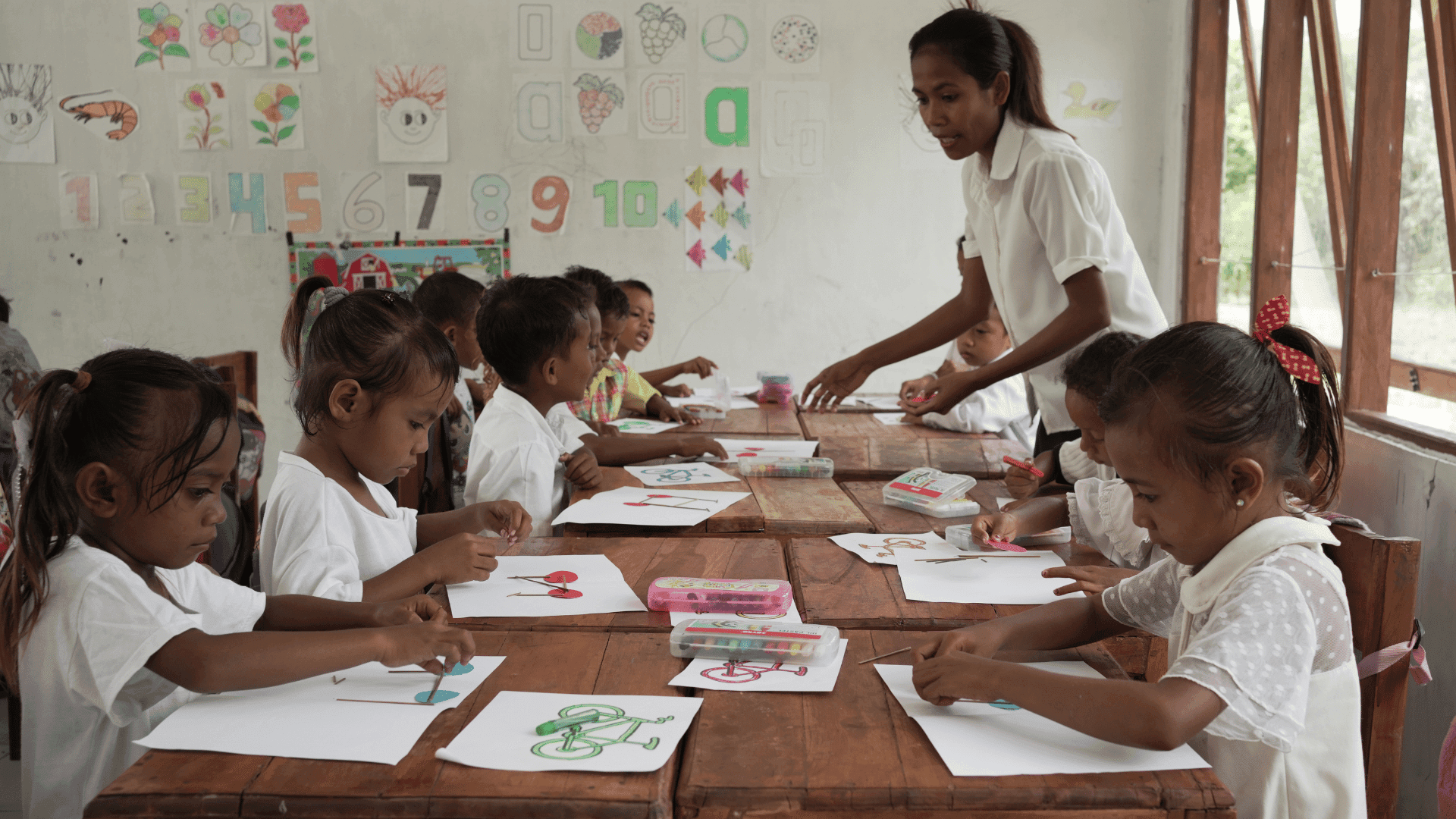
Targeted educational donations are determined by their alignment with children's needs, clear programme goals, and transparent management. Therefore, before donating, it is important for prospective donors to understand who the beneficiaries are, how the programme is run, and how programme progress is reported. With this information, every contribution can provide a more focused benefit for the education of Indonesian children.
We believe that the right donation is not determined by the size of the amount, but rather by its alignment with the needs of the beneficiaries. A suitable donation can be identified through clear programme targets, measurable goals, transparent use of funds, and the presence of programme progress reporting. This information helps prospective donors make wiser decisions.
What Is Meant by a Suitable Donation for Children's Education?
A suitable donation for children's education is support channeled based on the real needs of beneficiaries through programmes with clear goals. Assistance does not only focus on distributing funds, but also supports the child's learning process in line with the challenges they face.
Every child's educational needs are different. Some need access to school, learning equipment, a safe learning environment, or mentoring to follow their studies well. Therefore, good educational programmes are structured based on needs in the field, not based on assumptions.
Furthermore, programme goals need to be explained openly so that prospective donors understand who the beneficiaries, implementation areas, forms of activities, and desired outcomes are. Transparency regarding the programme and the use of funds also helps the public compare various programmes based on available information.
Support Aligned with Children's Educational Needs
We believe that every child has different educational needs. In one region, the main challenge might be access to school. In another region, the need might be learning supplies, improved educational facilities, or mentoring for children and families.
These differing conditions show that no single form of assistance can be applied across all regions. Therefore, educational programmes need to be adapted to community needs so that the support provided is more relevant and sustainable.
Programme Goals Can Be Understood by Prospective Donors
Before donating, prospective donors should understand the goals of the programme offered. A good programme explains target beneficiaries, implementation areas, activities carried out, and outcomes to be achieved.
This information helps demonstrate the connection between children's needs and the designed solutions. Conversely, overly general goals without explanation will make it difficult for the public to assess programme relevance.
Five Characteristics of Targeted Educational Donations
Here are five characteristics that can help you evaluate a programme before deciding to donate.
1. Programme Targets Are Clearly Explained
Check who the programme beneficiaries are, such as age groups, regions, or conditions that are the focus of the programme. This information helps ensure that activities are indeed designed to address specific needs.
Clear beneficiary criteria also show that the programme has a measurable direction without generalizing the needs of all Indonesian children.
2. Needs Form the Basis of Programme Design
A good programme begins with mapping community needs. The results of this mapping become the basis for structuring activities so that assistance better matches conditions in the field.
Needs can also change over time. Therefore, programmes need to be adjusted periodically. Educational support does not always take the form of financial aid, but can also be in the form of training, mentoring, strengthening teacher capacity, providing learning facilities, or other forms of support that sustain the educational process.
3. Use of Funds Is Explained Openly
Transparency is one of the important indicators in choosing an educational programme. Prospective donors should look for information regarding the use of funds through activity reports or annual reports published by the organisation.
In addition to supporting the implementation of activities, programme management also requires processes such as coordination, monitoring, and reporting. Therefore, what matters most is not that all funds are distributed directly, but rather the presence of open explanations regarding how funds are managed to achieve programme goals.
4. Programme Implementation Can Be Monitored
Targeted educational programmes do not stop at the planning stage. Their implementation also needs to be monitorable so that prospective donors understand how activities are run.
Pay attention to whether the organisation explains the activity schedule, implementation area, target beneficiaries, and parties involved. The involvement of families, schools, and communities is also an important part in supporting programme success. However, it should be remembered that the number of activities is not the sole measure of success. What is more important is the alignment of activities with programme goals and children's needs.
5. Programme Progress Is Reported
Progress reports help show how a programme is running and the results that have been achieved. Therefore, prospective donors should seek information regarding programme progress through reports or the organisation's official media.
Pay attention to whether the reports explain activities carried out, beneficiary progress, or outcomes achieved in line with programme goals. Documentation in the form of photos or videos can give an idea of activity implementation, but progress reports usually present more complete information. Organisations that provide official contacts also make it easier for the public to obtain explanations if there is still information they wish to know.
How to Choose a More Focused Educational Donation Programme
Choosing an educational donation programme can be done through a few simple steps so that your donation decision better aligns with your philanthropic goals.
Check Organisation Identity and Track Record
Ensure the organisation has a clear identity, including a profile, legal standing, and information regarding the programmes run. The organisation's track record, such as activity publications and programme reports, can also help you understand its commitment to supporting children's education.
Check Official Payment Channels
Use the payment channels available through the organisation's official website or media. This step helps reduce the risk of fraud while ensuring donations are received through the correct channels. Trusted organisations also typically provide official contacts to help answer prospective donors' questions.
Compare Programmes with Donation Goals
Every programme has a different focus. Before donating, compare the programme goals, target beneficiaries, implementation areas, and forms of activities with your philanthropic goals. Choosing an educational donation in this manner helps ensure that the support provided truly matches your expectations.
Ask Questions When Information Is Incomplete
If there is information that is not yet clear, do not hesitate to contact the organisation. Asking about programme targets, implementation mechanisms, fund usage, or reporting formats is a reasonable step before donating. By obtaining adequate information, you can make your choice with greater confidence.
Recognise Forms of Support for Indonesian Children's Education
You now understand that a suitable donation is not only related to the intention to help, but also to the alignment between children's needs, programme goals, transparency, and the reporting provided by the organisation.
In Indonesia, every child's educational needs can vary according to regional conditions and the challenges faced. Therefore, the required forms of support are not always the same. There are programmes focusing on increasing educational access, strengthening learning environments, providing learning facilities, as well as mentoring for children, families, and teachers.
Every educational need requires different support. Recognise the forms of children's educational support that match your philanthropic goals.