The Long-Term Impact of Aid for Vulnerable Children in Realising a Brighter Future
Every child in the world deserves a bright future, filled with hope, opportunity, and happiness. However, for millions of vulnerable children in Indonesia, these fundamental rights are often snatched away by various challenges, ranging from poverty and limited access to education to unsupportive environments.
They are the next generation who require a helping hand to rise and break free from the cycle of hardship. Support provided to them, especially that which focuses on education, is not merely a temporary handout; it is a long-term investment whose impact can change the destiny of an entire generation and those to follow.
This article will explore how planned and sustainable support can be the key to unlocking the door to the future for Indonesia's vulnerable children. We will see how educational interventions, strengthened by initiatives such as the Childhood Hope programme, do more than just provide materials—they empower children, families, and entire communities. From remote villages to marginalised urban corners, every bit of assistance has the potential to create fundamental and lasting change.
Breaking the Cycle of Poverty: Education as the Primary Weapon
One of the most tangible impacts of long-term aid is its ability to break the cycle of poverty that is often passed down from generation to generation. For vulnerable children in Indonesia, poverty is not just a lack of money, but also a lack of access to a decent education.
When children lose the chance to go to school, they lose the most powerful tool for improving their circumstances. They become susceptible to child labour, are forced to drop out, and ultimately grow into individuals with limited skills who struggle to compete in the modern workforce. Consequently, they tend to remain in low-paid working-class roles, and it is highly likely that their own children will face the same fate.
Educational support is a crucial solution to this problem. The assistance provided is not just for paying school fees; it also covers the provision of supplies, uniforms, and tutoring support. Such aid provides a solid foundation for children to develop knowledge and skills.
With adequate education, they gain not only better job opportunities but also the ability to think critically, solve problems, and make wise decisions. This turns them into independent and empowered individuals who, in turn, can improve their family's standard of living and contribute positively to society.
Through Childhood Hope, you are not just supporting infrastructure or resources; you are supporting the improvement of education, health services, and a safe environment for children through skills activities and behaviour change programmes for parents, teachers, and other community members. Through such programmes, WVI ensures every child can realise their hopes.
Developing Potential and Opening Doors of Hope
Assistance for Indonesia’s vulnerable children is not just about survival; it is about developing personal potential. Every child is born with unique talents and interests. Unfortunately, children living in hardship often lack the opportunity to explore or hone that potential. They are forced to prioritise basic needs over self-development, which ultimately hinders their holistic personal growth.
Structured and holistic support, as embodied in the Childhood Hope programme, ensures that children receive more than just books and uniforms. This programme is designed to provide a space for them to learn, experiment, and explore the world around them.
Through education, they can discover hidden talents, sharpen their skills, and build self-confidence. This type of assistance does more than improve academic ability; it equips them with essential life skills such as leadership, teamwork, and creativity.
When a child feels supported and valued, they are more motivated to reach for their dreams. This support opens doors of hope that previously felt firmly shut. They begin to believe they can have a better future, and this belief is the most vital fuel to drive them toward achieving those dreams. With the knowledge and skills gained, they will be better prepared to face future challenges, choose career paths that match their interests, and ultimately become agents of positive change in their communities.
Community Impact: Changing Villages from the Root
The long-term impact of aid for vulnerable children in Indonesia does not stop with the individual; it ripples out to the community level. Effective programmes are designed to empower the entire ecosystem surrounding the child. In the village of Kuripan Kidul, for example, awareness of the importance of educational aid encouraged various parties to work together.
They realised that education issues in remote areas cannot be solved by scholarships alone. A more comprehensive approach is needed, ranging from the construction of educational facilities and infrastructure to improving teacher competence and utilising information and communication technology.
An ideal aid programme is one capable of creating a positive cycle within the community. For instance, when children in a village receive a proper education, the community's literacy rate increases. Parents become more motivated to support their children's education, and awareness of health and sanitation also grows. This creates a more conducive environment for a child's growth, which eventually impacts the quality of human resources in that village.
The Childhood Hope programme, for example, does not only target children but also involves parents, teachers, and other community members through behaviour change programmes and skills activities. This ensures that the entire community moves together to create a safe, healthy, and supportive environment for every child.
Getting to Know the Childhood Hope Programme: Hope for Every Vulnerable Child in Indonesia
The Childhood Hope programme is a crucial initiative designed to provide holistic and sustainable support for vulnerable Indonesian children living in remote and marginalised areas. This programme is the answer for those who wish to participate in change without having to go through individual child sponsorship schemes. Donations given through this programme are managed collectively to support various strategic programmes that deliver the greatest impact, including:
1. Quality Education Services
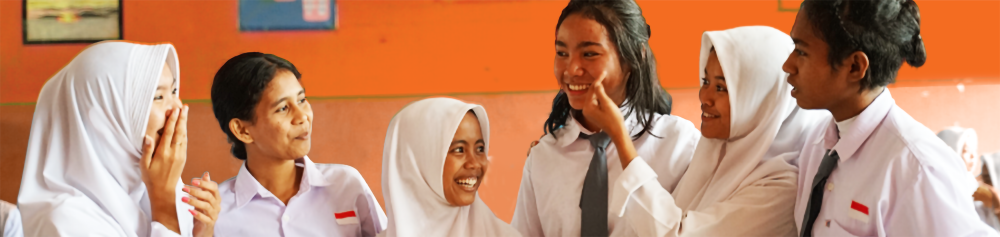
Ensuring children have access to decent schools, textbooks, and competent teachers. The programme also supports literacy initiatives and tutoring to improve academic achievement.
2. Health and Nutrition
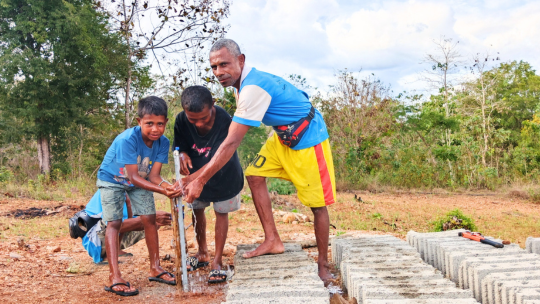
Providing nutritional interventions, access to clean water and sanitation, and improving health services at local health posts (Posyandu). Children who are physically and mentally healthy are better prepared to learn and grow.
3. Child Protection
Ensuring that children are protected from all forms of violence, exploitation, and discrimination. The programme also provides education to parents and the community regarding the importance of children's rights.
4. Family Economic Development
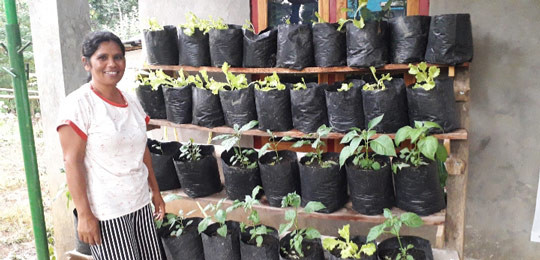
Helping the families of vulnerable children to achieve a stable income, so they can become independent and provide for their children's basic needs.
With this holistic approach, the Childhood Hope programme ensures that the aid provided is not just a "quick fix" but is capable of creating fundamental, sustainable change. Every donation becomes part of a large movement striving to realise children's rights comprehensively.
A Long-Term Commitment: Changing the Future Starting Now
Realising a bright future for Indonesia’s vulnerable children is a marathon, not a sprint. The impact of the support we give today may not be visible instantly, but its impact will be felt strongly in the long run.
When a child whose education is supported today grows up to be a teacher, a doctor, or a leader in their village, they are not just changing their own destiny; they become an inspiration for the next generation. They serve as living proof that poverty is not destiny, but a challenge that can be conquered with hard work, hope, and support from others.
Therefore, long-term commitment is essential. It requires a vision that looks far ahead and a sustainable approach to ensure that the changes we plant today will continue to grow and bear fruit in the future.
Programmes like Childhood Hope are a tangible expression of that commitment. This programme focuses not only on results but also on the process, ensuring that every intervention has a positive domino effect, touching every aspect of the child’s life and their community.
Ultimately, the future of Indonesia’s vulnerable children is our shared responsibility. The government, humanitarian organisations, private institutions, and civil society all have their respective roles in ensuring every child receives an equal opportunity. With strong synergy and collaboration, we can build a solid foundation for a fairer and more prosperous nation.
An Invitation to Realise Hope with Us
Realising hope for vulnerable children in Indonesia is not an impossible dream. We at Wahana Visi Indonesia have seen it happen in various regions, where a small amount of help can be the start of a great story of change. We believe that every child deserves to experience life in all its fullness, and you can be part of this noble journey.
Through the Childhood Hope programme, we invite you to become a link in the chain of hope for children in the furthest and most disadvantaged places in Indonesia. Your help, no matter how small, will be managed professionally and transparently to ensure that every child gains access to education, health, protection, and the opportunity to thrive. Be part of our movement to create a better future, where every vulnerable child in Indonesia can achieve all their dreams and rights.
Visit the page wahanavisi.org/id/kampanye/childhood-hope now and start donating. With us, you are not just giving aid; you are investing in kindness that will grow into infinite hope for the nation's future generations.